The Brickabrats Release Debut Single & Video “Fun Night”
Portland, OR's The Brickabrats have released their debut single and video, Fun Night, that was mixed by Mark Kaeder with…


The Descendents are one of the most beloved bands of their kind. They’re often cited as a major influence by other bands, their records have stood timeless to fans old and new, their recent return to playing live shows has resulted in thousands of tickets sold and sold out gigs, and they have shown you can grow up without necessarily growing old. ThePunkSite had the great pleasure of speaking with vocalist Milo Aukerman and drummer Bill Stevenson before their performance at the 4,000 person capacity venue, Congress Theater, during Riot Fest Chicago. Milo and Bill discussed playing in a band with grownup responsibilities, battling a brain tumor, what the future holds, and what a gnarly trip this past year has been.
Amy: You took a break from playing shows for many years and within the past year you have played several, what got you playing shows again?
Milo: For me it’s been oh, 15 years. We played a show in 2002 and then from that until last year… it was a really long gap. We all had kids, Bill had kids, Stephen had kids, and I had two kids, so now we’re family dudes. For me, my kids got up to a certain age where they were actually listening to the band and saying, “Oh, when are you going to play a show?” and I thought well, maybe we can make that happen. They were also at an age where I felt I could leave town for a while.
 Bill: It took us several years to get a handle on job stuff, parent stuff, husband stuff, and get all that to where it is functioning. Even he (Milo) has kind of a tenure if you will at his job, so he has a little more freedom than he did when he first started there. That’s obviously high expertise, high competition, it is crazy — only the best of the best get to do that. In a similar way, with my stuff too, with producing records… studios are going out of business left and right. There had to be a time where everybody was like, “Yeah, I can do that,” and “Yeah, I want to do this,” so now we are doing it.
Milo: Like he said, with my job I was able to cobble together enough vacation time to go play out this year, and I decided together with my wife that it was a worthwhile endeavor because of the kids and there was a pretty decent demand for it. Obviously, we’re not totally immune to that kind of… “Please, come play!” Alright, twist my arm, we’ll do it, so that’s been good. I think that’s two things, and the other is he (Bill) had health issues last year with his head, so we’re monetarily trying to help out that way too.
Amy: How long have you been dealing with health issues?
Bill: I’m good now. I was very ill for 2009 and half of 2010, but I was declining in 2007 and 08. I had a Meningioma brain tumor, bifrontal, that was 6.5 cm — the size of a grapefruit. I had surgery about 15 months ago and they removed it and it was benign, not scheduled to be growing back. It caused a whole domino effect of other health problems that I had to deal with one-by-one — among them being diabetes, sleep apnea, and a blood clot which became pulmonary embolism, ripped through my heart, and lodged itself into my lungs. I was on oxygen for a year. I’ve been extremely ill, but I have kicked the ass of all of those things and I’m here to rock!
Amy: That’s a lot to get through, and now you’re out there playing not only Descendents shows, but ALL shows as well some weekends.
Milo: He’s probably in better shape than you were in the last 10 or 15 years.
Bill: I am building myself back. My body, after the brain tumor, rendered me unmotivated — mentally and physically taxed, and I became very sedentary. I got up to 400 pounds and it has been a process to get myself put back together, but I am certainly working on it. Even now you have your ups and downs.
Amy: It is amazing that you have gotten back up to this point where you are out and playing again.
Bill: Yeah, I’m killing it! That part I am not modest about, I’m really, really comfortable with my playing right now.
Amy: When you released Cool To Be You, did you decide from the get-go that you were not going to tour, that you just wanted to do a record?
Milo: Yeah, that was it. I sent Bill some songs and actually a year or so went by and then he said, “Yeah let’s do them!” I said, “Okay, but guess what — I’m having a kid in three months. My wife is pregnant and we’re going to have my first kid,” and then it became well… there is no way this is going to work to tour. We can make a record and it was really fun making that record. I think of that period as being a highly creative period for me because of my son and the record coming out… Oh jeez, Bill just farted and he totally cleared out a 20 yard space around ground zero here. Anyway, so yeah I think we decided from the get-go we were not going to tour, and for that reason I consider that record more of just we did it for ourselves. All of our records are somewhat that way, where we are just trying to do it to satisfy some personal and creative goal, but that record even more-so because we were not even touring to support it. It was just like throw it out there, we don’t care what happens with it really.
Amy: How gratifying has it been to play these shows with the huge turnouts and overwhelming positive response?
Milo: It’s been great. It totally came unexpected because I am always of the opinion that fading to obscurity is the normal route that a band would take, and I just figured that was going to be the route for us. To find that you can go away from it for so long and come back and have things be even bigger than they were before, it’s a bit of a head scratcher for me; I really don’t have a good explanation for it.
Bill: Every one of these shows this year, because they have been so much gnarlier than they were before, every one of these show so far I think, we will get up there and totally play 2 or 3 songs, and at some point, I’ll take a breath and look at Milo like, where did all these people come from?
Milo: What’s going on here? It’s been good.
Bill: It’s like whoa, really?
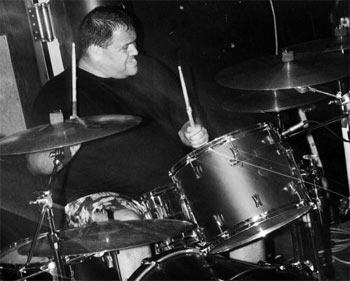 Milo: I’m sure part of it is we played in the ’90s, and then there is going to be a whole slew of people that were not quite old enough to see us then, so you have those people coming back like here’s my chance to see them. Then you have people from the ’90s that saw us then and people from the ’80s who still want to come back, so that’s like a cumulative effect is really what is comes down to.
Bill: And the young people feel like well, I have to go to this because they are considered one of the first punk bands of that ilk, I better go check it out. It’s like they feel like they have to take part of it, they are buying into a period of time.
Amy: Have you ever considered remastering or remixing the old records?
Bill: I was just talking to Stephen (Egerton, guitar) and Karl (Alvarez, bass) about that. I really wish we had a better relationship with Greg Ginn (SST Records) because he is unresponsive to anything, and he also does not pay us royalties. It’s very sad because I would mix and master all of that stuff properly for free for the love of just having it be and sound better, and not have it be all these different weird recordings that we did for a thousand dollars that sound, by today’s standards, so futile.
Amy: Because that ALL Greatest Hits sounds great, so it would be cool to see something like that.
Bill: I remixed all of that. That’s cool because I have not really talked to people about that. When you remix, to me it is always really tricky because what you are doing there is messing with history, and so I think there has to be a tremendous amount of reverence, respect, and caution given to the original thing because you cannot do anything that runs counter to the original ethos. You have to do it with the genuine intent of I really think this is what we were going for, but we did not know how to pull it off at the time.
Amy: Do you have any plans for new music or have you been writing anything, or are you kind of just going out and having fun playing some shows?
Milo: We’ve always got new songs; the big question is, when we are going to have time to do that, just because this year we are playing about 18 shows.
Bill: We’ve been overseas three times too. We’re just trying to fit it all in.
Milo: Basically, I have limited amount of time I can do it, vacation days basically. Any recording we do would be at the expense of shows, so it’s kind of one of these things like, well do you want to do more shows or do you want to sit down in a room and record? At some point, we will have to cross that bridge when we come to it, but for now we are just enjoying the shows so much. We do all have songs, I have written a few and I’ve never been that big of a songwriter, so if I can come up with two or three I’m pretty happy.
Bill: Neither have I. I have always done a couple songs per year, and then I feel I was kind of robbed of that consistency while I was ill because one of the products of my brain tumor was I could not finish things. I am still catching up on some many things that never got done, whether it be my tax return, mixing or remixing I was supposed to do for various other bands, everything. Five years ago we moved houses and I never unpacked any of my belongings. Now we have moved back into a different, smaller house and I am still trying to unpack my belongings. So many things got put on hold for me for basically the better part of five or six years. I have only now really been made aware of it, conscious of it. Everywhere you turn there is unfinished business, things that you started and never finished.
Amy: Is the songwriting process a lot different these days since you guys are all grown-ups?
Milo: I’d say that early on we were fairly collaborative, although this is the way it has usually worked for us: someone will come in with a song completed, “Here’s my song.” That has been all the way through, and then back in the old days someone might come in with a bunch of riffs and someone would go, “I’ll put some words to that.” What we are doing more of now is just coming in with complete songs. That’s how we deal with whatever you want to call it, the distance or whatever, so in that sense there is not as much of a collaborative process of the songwriting. However, whenever you write something of course anyone can come in with ideas to add to the song and that happens a lot too.
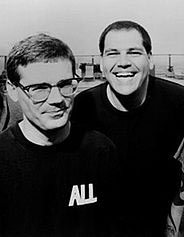 Amy: Everyone is pretty spread out all over the place, right?
Milo: Yeah, but the nice thing is in the digital age it is easily solvable.
Bill: We have never actually thought that through consciously or formally. Even with recording there are possibilities now that would render us much more able to record in little free time as it comes along than say back in the day of analog tape days.
Amy: What do you think is striking about the Descendents? Why do you think all of these people are coming out to see you guys all these years later and still want to see you come out the new music? What makes you relevant today and always?
Bill: I think the fact that we were never the band of the week, never the popular or trendy band. I think that also has meant that we have never been the band that is now dated, out of favor, or passé. By virtue of never having been trendy, it is almost like we are aging like fine wine. We were never trendy, we were never cheap, and we were never the hot new thing. Now we are just a band that people like.
Milo: That is kind of what I think, too.
Bill: It is kind of hard to talk about the virtues of your own band. Oh, we’re so rad.
Milo: I think people come out to see us because we rock!
Bill: We’re so hot and awesome.
Milo: We had all these records with all this weird stuff on it; we never really had a set kind of direction. We never pinned ourselves into a corner where it was like okay, say this one record took off, well then the next record is going to have to be like that and if it wasn’t, you just torpedoed your whole future as a band.
Bill: Our lack of a focused, conscious plan or strategy for the band has kind of been our best friend because we just let the songs themselves dictate the compass course that we would take at any given time, and I think that has served to have us come off as a pretty honest band. I think people are intuitive to that when they listen and they pick up on that.


