The SoDa Poppers Drop New Single “Not Even In Your Wildest (Fuckin’) Dreams”
Johny Skullknuckles (The Kopek Millionaires / The Dead Beats / Goldblade) continues his musical adventures with The SoDa Poppers and their brand new…


Frank Turner is blunt, there’s no denying that; but he’s also very captivating, interesting and thought-provoking. At least he was in my thirty minute conversation with him before he took the stage opening for Gaslight Anthem last Saturday. We began with the easy stuff: the tour, the album (Poetry of the Deed) and CNN; and then soon progressed into more personal matters where he talk more about his opinions on illegal downloading, the beauty of a well-written couplet and the benefits of growing up obsessed with punk rock. Unafraid to say what he believes, Turner sat down and laid it all out in the open and backed it all up with examples too making for a lengthy but fascinating interview.
Bobby: Starting with the basics, you’ve been on this tour with Gaslight Anthem, Loved Ones and Murder By Death for just a little over two weeks now, how’s that going?
Frank: Really good. Gaslight and I are tour buddies from Europe. Earlier this year we did like six weeks together so it’s nice to hook up with them again. It’s cool to be on a tour like this in the States. I haven’t really done that many tours of this kind of scale or type in the States, or Canada I should say. North America – there we go. So yeah, it’s really cool; the shows have been going well. It’s been fun.
Bobby: Has there been any really memorable moments from it so far?
 Frank: *laughs* Yeah, a few here and there. We’ve been having some fun. I succeeded in annihilating my knee in Vancouver when I was very much the worse for wear. The shows have been really good. In fact, probably my biggest moment of the tour so far was when Tim Armstrong came to watch my set in LA which I didn’t know was happening. I finished my set and Tim just walked up and was “great job, I think you’re really good” type of thing. I just didn’t even say anything. I was like “oh my god…” It was awesome.
Bobby: Like you said, you did a six week tour with Gaslight back in January/February of this year. So is it nice to be back on the road with them?
Frank: Oh yeah, yeah, definitely. We all got on really well. I’m actually travelling on their tour bus at the moment, so yes; it’s very kind of comfortable and familiar. It’s fun.
Bobby: On that tour, I don’t know if it was for the encore or what but you always did a cover of Billy Bragg’s New England. What are the chances that you guys are pulling that out on this tour or another duet?
Frank: Me and Brian have been chatting about it. We’re actually talking about maybe doing a Dylan song together. I don’t know. We’ve sort of talked about it; maybe it’ll happen today, maybe it won’t, hard to say really. It’s fun. I think we’re both on the same kind of page in the sense that music collaboration and covers and all that kind of thing is a fun place to be in.
Bobby: In July when you were touring with the Offspring you had an off day when you were touring in Philadelphia where you played a basement show at the Titan House; and, of course, with YouTube, the video ended up online. Do you remember that show?
Frank: Yeah. Of course.
Bobby: That was a very small venue. This is a relatively small show but compared to the basement show it’s huge. Do you sometimes miss that massive interaction and intimacy?
Frank: I don’t know. To me what makes a show is atmosphere. I wouldn’t really say that I prefer small shows or I prefer big shows or I prefer this or prefer that. That Philadelphia show had a ton of atmosphere so it was an amazing show but I went to see Springsteen play in Hyde Park to sixty thousand people and that was an amazing atmosphere. So it’s pretty kind of intangible. I’ll pretty much play anywhere, anytime for anybody – I just like playing guitar. I’ve had some really, really amazing electric kind of shows in different places. I don’t have an ideal size of venue or anything like that; it’s more just about the feeling in the room when you’re playing.
Bobby: On the video, you said that show was in your top three shows of all time; I’m wondering what were your other top two shows of all time?
Frank: *laughs* Wow. I shouldn’t make rash statements like that I guess. Well, okay two things. I did a show last Christmas in London at a place called the Proud Galleries. It’s a room that holds five hundred people and they accidentally sold seven hundred tickets, so it was pretty crazy anyway. And basically, I’ll give you the short version of this, there was a bar in London called Nambucca which was where I learned an awful lot about what I know about folk music and I pretty much lived there for a while. There were about twenty people who lived there and they were all really good friends of mine. It was really kind of like the scene epicentre and the day before the show Nambucca burned down in a fire and was totally destroyed. No one was hurt but everyone lost all their possessions and some of the bands lost their equipment and everyone was sort of homeless and smelling of smoke. It was a really bad time for them so at the last minute we decided to make the show into a benefit show for them because it was right before Christmas as well. So it turned into a benefit show and the atmosphere at that gig was just unbelievable. There was just an amazing kind of feel in the room and atmosphere, so that was cool.
And then Reading festival this year was pretty special. It was the biggest crowd who was there to see me; that I played to. We had about sixteen thousand people in the stands, so that was a pretty fucking cool feeling.
Bobby: This tour is in support of your new album called Poetry of the Deed which came out September 8th on Epitaph and X-tra Mile in the UK. How has the reaction been so far in the two weeks that it’s been out?
Frank: It’s been good. It’s funny, in my music career there was probably more people waiting to hear this record than any other record I’ve made, if you see what I mean? Which is kind of a weird feeling, it’s not something I’m really used to; having any kind of expectation around the record. And the other thing that was kind of weird was that we finished making the album before the previous record came out probably on Epitaph in the United States and Europe. So there was a degree of pressure and I worked really hard on the album trying to make it as good as I could– and I’m happy that I did the best I could and that’s all fine. But basically after we finished the record then Love Ire and Song came out everywhere and it started to get really, really great reviews and everything all across America and Europe. So all of a sudden I suddenly felt really, really pressured about the next album but there was nothing I could do about it because it was finished. So that was a weird place to be in for a couple of months where I felt quite kind of disempowered – “ah, there’s nothing I can do about it now.” But you know what, the reaction’s been good, people are really into the record.
Again, the funny thing is there are some people who just straight away are like “oh, it’s amazing.” It’s kind of like – I don’t want to be rude to people – but I think there’s a degree to which where people who are fans and they get hold of a new record, they’re just going to be into it. And then there are some people who are just like “oh, it’s not as good as the old stuff.” I don’t know. It’s just sort of hard to sort out genuine opinions from kind of contextual opinions if you know what I mean?
Then the other thing, at the end of day, like I said my main thing in life is that I’m comfortable that I made the best record I could at that point in time. I’m interested in what other people have to think, but it’s not going to change the way I do things.
Bobby: With this record you did change the way you did things a bit. For the first time you had a full backing band as opposed to just you and Nigel coming in and doing drums, what made you decide to do that?
Frank: Well, I’ve been touring with the band in Europe and in the UK. We long ago reached the point where, to my mind, the live version of pretty much everything from the first two records is better than the recorded version. Partly because it’s played in, it’s more kind of live and I like rock and roll music, I like the sound of the band playing; but also the guys who play in my band – it took me quite a long time to get the line-up together – they’re all amazing musicians. They’re all better than me. It just seemed to be crazy to do things the same thing again and then just end up with the live version better than the studio version again further down the road.
Also, I always sort of feel like when one writes, one writes for an imaginary room. So when I was doing the first record I did, I guess I was writing for a bar with fifty people in it. The second record I was maybe writing for a club with maybe two hundred people in there. I just feel for this record I was writing for a slightly larger room and I wanted a slightly bigger sound.
Bobby: Like I said, this was your first record on Epitaph not counting your re-release of Love Ire and Song. How did you get in touch with Epitaph?
Frank: They got in touch with me actually. It was funny because I was in the middle of talking to a whole bunch of other labels about releasing my stuff outside of the UK and I wasn’t having the best time with it to be honest, because they were all being dicks. One of the main things was pretty much everyone wanted me to leave X-Tra Mile Recordings in the UK and those guys are like my family, it was just never a realistic option for me to leave those guys but everyone seemed to assume that that was what I was going to do.
We had some contact with A&R people but eventually I got a phone call from Brett Gurewitz. He got my number and called me up and just said “I really like your music and I want to sign you.” I was just like *open mouthed, shocked expression*
Bobby: When it’s Mr. Brett, you don’t say no.
Frank: Yeah, yeah right. He started explaining who he was on the phone. I was like “you don’t need to tell me who you are. I fucking know who you are. Jesus Christ.” But he was really cool and just really genuinely a fan of what I do. It came together really quickly from there and I’m super, super happy about working with him.
On the one hand, you have the whole prestige thing with being involved with Epitaph and Brett Guerewitz and the rest of it; but they’re also just a really great label day to day with helping out with promotion and that kind of thing. So thumbs up.
Bobby: Speaking about promotion, for the promotion of this record you actually had two features on CNN. How did that all happen?
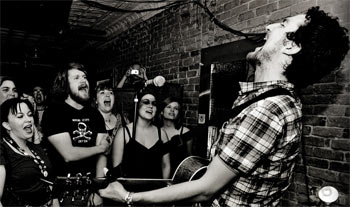 Frank: Well, that started with Mr. Peter Grumbine who’s their music dude. I think Epitaph sent him the record and he just went crazy over it so yeah we did the two features. You know the actual studio where they have the anchors in Atlanta, Georgia? I’m going through there on the Revival Tour in November, so apparently they’re trying to hook it up so I actually go in the studio to hang out. It’s crazy.
Bobby: Kind of mind blowing, being in CNN.
Frank: Yeah. I try to take a detached approached to any of that shit. Just kind of like “fuck it, why not?” When in Rome…
Bobby: For your lead single, The Road, you did a very interesting music video with 24 shows in 24 hours. Who’s idea was that?
Frank: It was my idea and I hated myself for it for about two thirds of the video shoot. The beginning was easy and the end, like the last couple of hours, was easy. But the middle, dear God… We did eight PM to eight PM and when it got to about eleven AM, midday, it was just fucking horrible. There was me, the director, camera guy, a runner and a driver and just no one wanted to be there anymore. We were driving around and everyone was like…
Bobby: It’s been sixteen shows, isn’t that enough?
Frank: Right, that’s the thing. You get seven under your belt and you’re thinking “yeah, we’re doing pretty good.” Then somebody’s like “yeah, you still have eighteen more shows to do.” It’s just like “oooh my God!” But in the end, it came out as a cool video and it was a lot of fun to make in hindsight. It’s kind of an experience and I’m glad I did it. I’m happy we did it.
Bobby: The Poetry of the Deed isn’t the only thing you have coming out right away. In October you’re on a new compilation called Memoria – A Tribute to the Alternative 90s coming out on Yr Letter Records. How did you get involved with one?
Frank: Matt, the guy organizing it, got in touch with me ages ago and said “do you like music from the nineties?” And I said “yes, all good music ceased in 1999.” *laughs* We just started talking about. I mean, did Kerbdog ever get known over here?
Bobby: That was my next question, you’re doing the song Sally by Kerbdog and I have no idea who that is. Who is Kerbdog?
Frank: Okay, wow. Okay. Where do I even start? Kerbdog was kind of the UK’s answer to… I don’t know, maybe Quicksand is probably the right thing.
Story of Kerbdog. Kerbdog was signed because their first album sort of sounded a bit like Metallica. They were basically signed when Metallica started to put out Load and ReLoad and terrible fucking crap. So they were signed to a major label deal to put out records that would sound like the Black Album. The only problem was in between their first album and second album, they went away and just totally changed and came back with this record called “On The Turn.” Basically, the labels didn’t really know what to do with it. It came out, they pushed it a little a bit and then the label dropped them and the band broke up and that was the end of it.
So it’s kind of one of the great lost records of the nineties to my mind. It’s just fucking… If you’re into any of that post-hardcore kind of stuff, it is the album to end all albums. It is amazing. It is the perfect kind of stop off point between kind of like Nirvanna and Rival Schools. Just an amazing record and in the UK they’re really like a band’s band. Not that many people know them but most of the people who do are in bands; and most of the people who know them are completely obsessed with them.
So that was a really big record for me when I was a kid and Sally’s a fun song so I did that song.
Bobby: Also, last Friday you released your CD, The Last Three Years, on double LP through Paper + Plastick. Were you glad to have it out in the vinyl format?
Frank: Yeah. It’s funny; I’m not really a vinyl person. I didn’t grow up with vinyl or anything like. The only vinyl I have is basically my stuff that I keep for prosperity. But having said all of that, when I got a hold of a copy of the Paper + Plastick vinyl; man, that’s a good looking piece of wax right there. It’s just a really, really beautiful vinyl. The artwork is great. Plus, it’s really great to be involved with Vinnie and Paper + Plastick.
Bobby: Yeah, he’s a really good business man. Like with Fuelled By Ramen, he brought that up. He knows what he’s doing.
Frank: Yeah, totally. And also, he’s just an enthusiast. He’s a fan and it’s just really nice to be working with people [who love you’re stuff]. It’s the same with Brett really. Obviously he’s a really hard nose business man and he knows his stuff but he’s totally not above just turning around and going “I fucking love it!” And being all excited about it.
Bobby: It’s not all business, there’s emotion.
Frank: There’s passion, which is nice for me and I think its positive for his business as well. But yeah, I’m glad that came out as well.
Bobby: Vinyl is quite opposite of the current music trend which is, of course, digital MP3s. A month ago you wrote a rather interesting rant called “Angry Thoughts on a Tired Subject” which you got some interesting comments back about. Were you surprised at the reaction to what you had written?
Frank: I was surprised at some of it. I got fucking hate mail and death threats and shit in my emails. People saying they were going to fucking kill me at my next show. It’s just like “really? Calm down.” The thing is, some people raised some valid points in opposition to it; but this is the thing, it’s a debate. One of the things that frustrates me most about it is that so many bands, in the interest of kind of placating everybody, don’t really talk about it. To me, that’s just a really bourgeois approach.
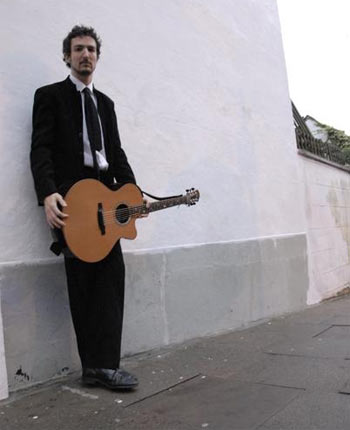 I consider myself a working musician. This is my job. Blue-collar is probably the best way to put it. I’m a blue-collar musician. I sing for my supper. We need to talk about this because big changes are taking places. I’m generally pro-internet and I think we could probably end up in a more equitable future but at the moment, a lot of people are losing out. Like I said in the blog, the people losing out aren’t David Geffen and Britney Spears. It’s smaller, independent workers in the music industry.
I think that we need to educate people about it. Because the one thing that I find absolutely amazing is the number of people who don’t really know about the economics of the music industry who feel free to sermonize on it. It’s kind of like, if you’re going to nick albums and download them, then just go and do it. People are going to do, fine. But don’t fucking try and turn it into this intellectual moral crusade in the process; because aside from anything else, you don’t know what you’re fucking talking about. I don’t want to sound like I’m up my own ass, but I do because I’ve been doing this job for a long fucking time. I just get very frustrated with people telling me how to live my life and run my business who don’t know anything about it.
I don’t regret posting the blog. It did generate a lot of heat. Like I said, a fair amount of which was worthy debate and I’m not for a second saying that I’ve got all the answers and have it all figured out or anything like that. Sorry, I’m ranting a little bit now.
But one of the things that blew me away was the number of kids who would say stuff like “you should feel privileged that I’ve chosen to listen your music rather than any other music out there;” to which I was like “if I told you that you that you should feel privileged because I’ve bothered to record some of my wonderful music for you to listen to, you’d call me the worst kind of rock star asshole – and you’d be right.”
There’s this sense of entitlement. People are e-mailing going “I can’t afford all the music I want, what am I supposed to do?” It’s like I can’t afford all the fucking CDs I want either. I can’t afford all the clothes that I want, I can’t afford all the things I want in life. When I want them, I aspire to them and I work harder. You know what I mean? Get a better fucking job if it’s that much of a fucking problem. Call me old fashioned, I grew up in at point in time where you worked and you saved money and you bought the shit you wanted.
Bobby: People have now a sense of entitlement. Like I’m your fan, I should be able to have your music no matter what. Well, it’s like why? What gives you that right?
Frank: The thing is, it isn’t anybody else’s business – the actual fine tuned numbers behind the economics but there have been moments where I’ve considered doing something like publishing my accounts. I don’t make fucking make money out of it. Well, I scrape a living out of what I do. I still live with my mom because I don’t make enough money at what I do to have my own place. That’s the other thing as well, you would be amazed at the number of kids who come up to me at shows and say stuff like “oh, you should buy me a drink cause you’re loaded.” Are you fucking kidding me? Just some people’s perceptions are just way off the mark.
What that says to me is that there’s a need for a wider education. I think one of the things that’s great about the internet and web 2.0 as an idea is that it’s very good at pulling aside the curtain and getting rid of all the mythologizing that goes around rock and roll which is something I’m very in favour of. I like the idea of people understanding better the mechanics of the music they’re into. I think that’s really cool, and really positive and really healthy. So I guess, in part, that’s what I wanted to do in that blog as well was kind of explain it more.
Bobby: Maybe it would be better if the RIAA, instead of suing everybody, did just say “look, this is how much it costs.” Just lay it all out there. Give everybody the facts.
Frank: Yeah, yeah, I totally agree with that. I think that some of the more aggressive kind of lawsuit action is really counter-productive. Because a lot of the time basically we’re talking about kids, people who still live with their parents and who don’t understand matters about the world. I get the impression that a lot of the people that are sending me some of the more vitriolic comments, I bet you any amount of money they’re not economically self supporting. I’ll bet you any amount of money they don’t pay income tax. So I think launching lawsuits against fifteen year olds is a fucking waste of everybody’s times.
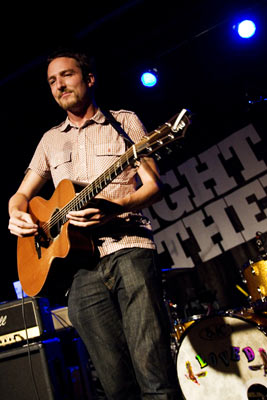 There needs to be a wider dissemination of information and a wider discussion about it. But it’s exciting. In the sixties it was an exciting period of time when the current structure of the music industry that is falling apart was being created with the creation of the LP, and the idea of the albums and singles and touring – that whole paradigm was created. It wasn’t the most even capitalizing, although it was a lot more equitable than what was happening in the thirties and forties and fifties. And as I keep saying, I’m sure that with the internet – in ten or fifteen years – we’ll be looking at a more equal system which I think would be a good thing; or at least a central system. We need to manage the transition.
I guess the bottom line on this is that I’m not fucking prepared to stand here and watch people fucking take my livelihood and the livelihood [of people the people I work with]. Because I pay all the people around me; I know it’s a cliché but the musician is normally the last person to get paid. Everybody else gets the cut and if you stop putting money in at one end, the person who stops getting money is the musician in the end. You still need to pay your studio fees, you still got to pay your management commission, you still got to pay your agent commission and the band hire for your tour and you got to buy your instruments and all that kind of shit. So the person who doesn’t get paid is the musician and maybe it makes me bitchy and petulant to say it, but fuck that.
Bobby: I really liked your analogy saying that saying “I downloaded your CD but then I went to your show and bought a shirt” is like stealing a car because you’re gonna put gas in it later.
Frank: Or I stole an iPod and I’m gonna buy some iPod accessories. That’s not really the point. But then, who knows. Maybe we are reaching a point where recorded music will essentially be free. That’s an interesting and idea and one that I think we should all discuss. But if that happens, then there needs to be recognition in some other areas because it’s not free to make music. I get kids who say “you could record your album in Garage Band.” But then you’d say it was totally shit because it would sound totally shit if I fucking recoded it on Garage Band.
Bobby: You can record it there, but if you want to get a good sound you need to get the proper equipment – not the two hundred dollar thing that you can buy anywhere. You said in your blog that sometime, maybe in ten years or whatever, there will be some sort of regulation of it. Muse, a few days ago, suggested that they should put out a tax for bandwidth. A blanket tax that goes to the entertainment industry depending on the amount of bandwidth you use. Kind of like what we have in Canada where you buy a blank CD, a portion of that goes to the entertainment industry because they assume you’re using that to burn CDs.
Frank: That’s an interesting thing. Personally, I’m quite economically liberal and I’m not the biggest fan of tax as a concept. Again, that’s an interesting thing to talk about and I think we should all talk about it. In the past, basically the album, from a purely economic point of view, the album was the thing that made money and touring was an activity you did to support album sales. That’s basically been flipped on its head and I think that Madonna’s been leading the way on this one weirdly enough. In the sense that she’s basically signed a deal with Live Nation instead of with any record label and Live Nation essentially paid for her to record an album which is an advance against ticket sales. Which I think is an interesting economic model and I suspect that may be the way of the future; but who knows.
Bobby: I want to talk a bit about lyrics because you’ve had some quite interesting opinions on lyrics. You’ve talked about your love affairs with lyricists like John K. Samson, Bruce Springsteen, Mineral, Bob Dylan and Craig Finn from the Hold Steady. I actually heard that you have a Hold Steady tattoo of lyrics on your back.
Frank: Yes, it says “Damn Right I’ll Rise Again.” It’s from Your Little Hoodrat Friend. Are you a Hold Steady fan?
Bobby: I am. They were here on Monday, amazing show.
Frank: Yeah, they’re fucking good.
Bobby: But I don’t know the older stuff as much. More Boys and Girls in America and Stay Positive; I have the other two but I haven’t listened to them as often.
Frank: There’s a character, Holly, who has a tattoo on her back that says “Damn Right I’ll Rise Again” so I have that.
Bobby: I really enjoy your lyrics, particularly on songs like Photosynthesis, Ballad of Me And My Friends and Love Ire and Song; and by reading some of the interviews you’ve done you obviously have a love affair with a lot of different lyricists. So I want to know, in your mind, what makes a good lyric?
Frank: A million different things. I’m quite old fashioned when it comes to just a decent couplet, when something is put really well. Townes Van Zandt: “Living is mostly wasting time and I waste my fair share of mine.” The form and structure add to the beauty as well as the sentiment. To me, my favourite thing in lyrics is when you take something small and make it large. You zoom on something and then make it universal. Like John K. Samson, “Duct-tape and soldered wires, new words for old desires,” stuff like that. That kind of pull focus thing is a really big thing for me. I like it when lyrics almost make you feel uncomfortable by mining the truth. Do you know Loudon Wainwright? He’s from fucking ages ago – do you know Rufus and Martha Wainwright?
Bobby: I know their names, but I don’t know them.
Frank: He’s their dad. He’s been a singer-songwriter since the late sixties and he wrote this heart-breaking song, I think it’s about Bob Dylan. It’s called “I Saw Your Name in the Paper” and it’s just about a friend who gets really successful. It’s about the business of being famous and being iconic and that type of thing. It’s beautiful. At the end he’s talking about the interaction with the crowd and he says “You’ll feel like you’re their master but remember you’re their slave.” Just little fixes like that; it kind of sticks a knife in it and twists it around. There’s another one of his, its “Your mother and I are living apart; I know it sounds stupid but we’re not very smart.” It’s…
Bobby: It’s simple but quite…
Frank: There’s something true about it. I understand the saying “all great art starts with one true idea.” Just when somebody hits the truth, it kind of makes you feel uncomfortable.
Bobby: There’s one lyric I love by a band called The Matches. Do you know them?
Frank: I know the name.
Bobby: For one of their CDs, they had like nine different producers and Tim Armstrong helped produce one of the songs. The lyric in it goes like “If I’m the sum of all my friends, then all my friends are some of me. And if you are some way just like them, then I am you to some degree.” It’s such a nice turn of phrase.
Frank: That’s the thing; word play can be really nice. Like “This is a town full of losers and we’re pulling out of here to win.” I think that’s a fucking crazy lyric right there. What else? Do you know M. Ward? Singer/songwriter called M. Ward? I’ve only just recently come across him. I must admit I’m a bit fifty-fifty about him at the moment, but there’s one of his songs where he just finishes off and says “God dammit, it feels great to be alive and it tears me up inside to know I have to give it all up someday.” I just thought it was beautiful, the simplicity and rawness of that statement.
Bobby: Kind of like for the last line in the Ballad of Me and My Friends, “We’re definitely going to hell, but we’ll have all the best stories to tell.” When I head that, I was just like “that is awesome….”
Frank: Thank you.
Bobby: I also really want to talk a bit about your opinion on punk rock because you’ve said some interesting things in the past. You’re a folk singer but you’re quite accepted in the punk rock community.
Frank: Definitely, that’s where my background is.
Bobby: Yeah, with Million Dead and stuff like that. But you’ve said before that you’ve tried to distance yourself from the punk scene in the UK but you’re fine to be accepted in it in North America. Why is that? What’s the difference?
Frank: It’s very different. The punk scene in the UK is just totally bitchy basically and just really kind of narrow in a really tedious kind of way. The UK punk scene hasn’t produced bands like Against Me!. It hasn’t made that leap yet. I mean we’ve got Gallows, all due respect to them and they’re nice people and all that, but I’m not really a massive fan of what they do. It seems pretty kind of middle of the road. I don’t know, I just feel like I don’t want to be stuck in that… it just feels kind of dead-endy; whereas in the States the punk scene’s kind of bigger but it’s also more familiar. It seems to be more like helping each other out rather than cutting each other down. To some degree, I mean I’m sure there’s a nice store of bitchyness here and there. But yeah, from my personal experience, the American punk scene just seems a lot more about community and people helping each other out than it does in the UK.
Plus, Million Dead weren’t really known in this country. I’m very proud of everything that we did with Million Dead; I think we were a good band but I don’t want to spend the rest of my life being “that guy who was in that band” sort of thing.
Bobby: Right, it’s like you have that stigma attached to you. You don’t want it to always say “ex-member of.”
Frank: Right. And now I’ve been touring solo for as long as I was in Million Dead and I’ve put out twice as many records. I just don’t want to get labelled with that for the rest of my life. But it’s kind of cool now, in the UK I feel like it’s kind of passed now for the moment. The level of success I’ve received in the UK is much higher than anything I ever did with Million Dead.
Bobby: In some of your lyrics, you have somewhat conflicting ideas of what punk rock means to you. Back in the Day is all about how punk rock saved your life but then in Love Ire and Song, you have “and punk rock didn’t really live up to all it meant to be; and all the things I believed in my heart when I was young are now coasters for beer and clean surfaces for drugs.” So do you think punk did promise stuff it didn’t fulfill?
Frank: I don’t know. To me, punk rock is sort of like Catholicism. You’re born with it and you’ll die with it, there’s no escaping it. And I love it. At the end of the day, if you really pull it apart, I fucking love punk rock. I love going to a show in a fucking sticky, sweaty basement. Going through some zines at the distro and singing your fucking heart out to songs that still sound just like Jawbreaker and then fucking going home and waking up with a hangover. That, I love. There are a million different factors to it. Everybody’s had their kind of punk wars. As I get older, I just couldn’t really give a shit anymore. I take the things I like and don’t bother with the things I don’t like.
Punk has given the world some really fucking stupid, narrow-minded bull shit and it’s given the world some really empowering ideas as well. I find it really funny the way that one thing nobody ever really wants to talk about is that the Sex Pistols were essentially a boy band. They signed three major label deals and they were manufactured. I mean, even the fucking Ramones were hardly DIY.
Basically, it’s a multi-faceted thing that can mean a million different things to a million different people. I take the positive things out of it and I’m happy with that and I’ll just leave it at that I think.
Bobby: In Try This At Home on your new CD, you have one line that I really like that goes “forget about the haircuts, the stupid skinny jeans, the stampedes and the irony and the media-fed scenes because the only thing that punk rock should ever really mean is not waiting around for the light to turn green.” Do you think the ideals of punk have been sort of morphed into more of a marketing idea by places like Hot Topic?
 Frank: In places, yeah. What I was trying to say with that was that the main thing I took from punk rock was when I was sixteen, I formed a band. I did my first tour when I was sixteen that I booked myself with the band I was in at the time. We did that because it was like: right, we’re punks, what are we going to do? Form a band. What do punk bands do? Punk bands tour. Okay, how do you book a tour? We call a bunch of random strangers and put a tour together. It was so empowering to do that at sixteen years old.
That’s the thing. In punk rock, nobody fucking owes you anything. Get out there and make your own life. Make your own existence and that, to me, is the most powerful idea of punk rock. That’s kind of one of the reasons why I will defend it to the hilt. Kids who grow up being obsessed with indie rock grow up with a taste in music; kids who grow up obsessed with punk rock grow up with a taste in music but a set of ideals as well. I think that’s fucking excellent and I think that’s something we should be proud of as a scene of people.
Bobby: It’s not only about the music; it’s about the ideals of community.
Frank: Yeah. The main thing for me is, like I said, self-reliance. Henry Rollins, for me, is a really defining character of what punk rock is. You don’t fucking sit around and wait for somebody to give you the world on a plate.
Bobby: You get in the van.
Frank: Right. Get in the van, fucking tour. And with that, one of the things I really like about Henry Rollins is he’s not kind of militant with the whole DIY thing. He did his Gap adverts which pissed everyone off which I personally thought was genius. If stuff comes along then cool, run with it and roll with it and all the rest of it.
That’s where the bad side of punk rock is. When you see something like Gaslight having Bruce Springsteen on stage and then there are some people who are haters on it, it’s like “what the fuck man?” This is somebody from our little corner of the world, our little fucking scene that’s succeeding and doing it. We should be fucking partying in the streets, we’re fucking winning. And then some people are like “oh, wah, blah blah blah. It’s not DIY enough for me, it’s too mainstream.” It’s kind of like, well fuck off. It’s madness to me.
I just think that that kind of drive to sort of like create your own reality and your own world and not rely on other people, I think that’s a really healthy, positive thing.
Bobby: I guess that’s about it. Thanks a lot.
Frank: Cool man, it’s my pleasure.

The Arrow Room, Rancho Cucamonga, CA - 29th March 2026


