The SoDa Poppers Drop New Single “Not Even In Your Wildest (Fuckin’) Dreams”
Johny Skullknuckles (The Kopek Millionaires / The Dead Beats / Goldblade) continues his musical adventures with The SoDa Poppers and their brand new…


Simon Wolstencroft, formerly of The Fall and other notable bands, performs at the three-day event The Fall: Futures and Pasts at Manchester, UK’s Band on the Wall from the 5th to the 7th of June, 2026. I caught up with him at The Alchemist in Salford’s MediaCity to talk about his illustrious and diverse career, his influences, and the event itself.
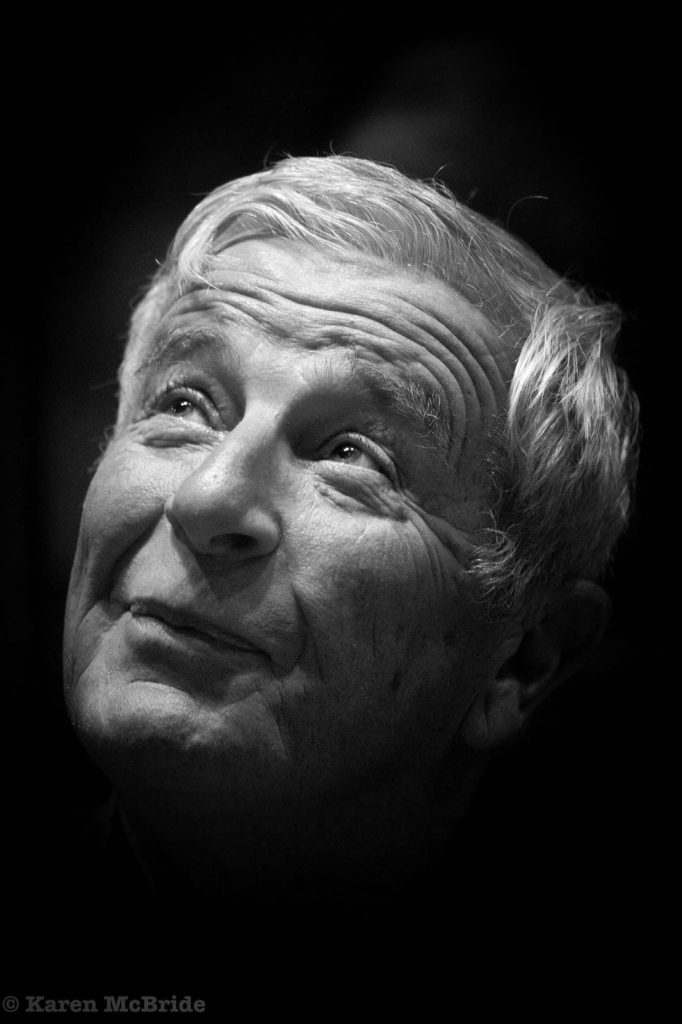
Simon, you’ve had a fascinating career as a versatile and unique drummer, and we’ll come to that during the interview, but firstly I’d like you to name five records that helped shape your instantly recognisable signature drum sound.
“Number one’s got to be Blockbuster, a glam classic by Sweet released on RCA Records in 1973; it peaked at number 1 on the charts. It certainly appears to be about Ted Bundy, the serial killer in America. The dead giveaway is: ‘You’d better beware, you’d better keep care, you better watch out if you got long black hair.’ It has a great drum beat that I’ve used on many of The Fall tracks, including on Big New Prinz, which is a firm favorite of the fans. The second one I’m going with is Tommy Gun by The Clash. This is a really powerful song which really excited me when I first heard it. The Clash were a massive influence on me, to say the least. I wouldn’t be here today if it wasn’t for them, as I got a taste for the rock and roll lifestyle by following them around with John Squire of The Stone Roses when we were at school. We used to get a national coach everywhere, here, there, and what you know, watching them. So, I’ll go with Tommy Gun. My third choice is a disco track: it’s Hamilton Bohannon’s Let’s Start the Dance, which I bought on a trip to Amsterdam when I was young. I went with Johnny Marr and Andy Rourke. We visited a record shop and heard this song. The artist is an American producer. Really funky. The fourth one is Mr. Pharmacist by The Fall, which is one I played on, of course. It’s a cover of The Other Half, a garage band from America. We recorded it in Abbey Road. What an experience that was when I first joined the band in ’86. My fifth choice is going to be a wildcard. It’s Get Down Tonight by KC and the Sunshine Band. It’s got a beautiful groove with not many drum rolls.”
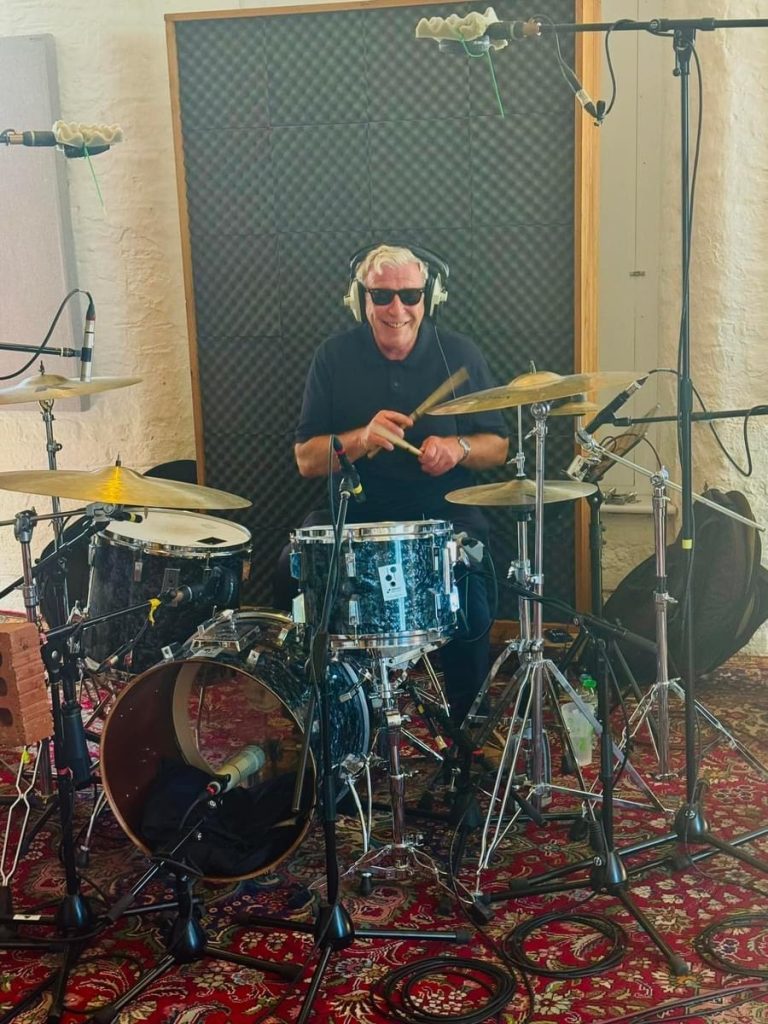
You’ve moved through Manchester’s musical orbit in ways that feel almost fabled, from an early stint with The Smiths to a spell with Terry Hall’s The Colourfield, where electronic and synth-driven textures came more into play. There’s also the long-circulated story that you passed on Oasis before they broke. Is that true? And going back further, you were part of The Smiths’ earliest line-up, who ultimately stepped away from that version of the band? Looking back, how did the shift from the angular jangle of that era to the more eclectic leanings of The Colourfield influence your sense of rhythm and experimentation?
“Yeah, so in 1981 or ’82, I met Johnny Marr in Sale in a pub. And basically, I heard he was looking for a drummer and he invited me around to Andy Rourke’s house. And we started a band up and named ourselves Freak Party. It sounded a bit like A Certain Ratio, sort of like an industrial-funk type band. And we rehearsed very hard in Ancoats and Decibel Studios. And we couldn’t find a singer, and basically what happened, uh, there was a lot of drugs knocking about. So, we basically split up for a few months. And Johnny rang me up one night and said, ‘I’ve met this guy, Morrissey. He’s a singer, we’ve got a band, it’s my band, called The Smiths.’ And I thought, shit name. I had addiction issues and then went down anyway to do a recording. We booked a 16-track studio where we cut three tracks for free at nighttime. We cracked on, but I just didn’t like the cut of Morrissey’s jib. For instance, he was singing songs about the Moors Murderers. I was more into jazz-funk, glam, punk, ska, and bands like ABC. This repertoire wasn’t for me at all. Johnny begged me to stay in the band, but I just didn’t fancy it. I just didn’t think it would go that far. Of course, within six months, they were on Top of the Pops. I’d made my bed, now I was gonna have to lie in it. After that, I joined The Fall for eleven years. I played with Terry Hall’s The Colourfield briefly and did a TV show with him up in Newcastle called The Tube. We did a song called The Trip by the notorious Kim Fowley, which I enjoyed doing, and two other beautifully crafted songs called The Alfield and Sorry. It was a great experience for me live TV, but it was frightening. Before I went on the show, I met Sade in the hotel bar. She said, ‘Are you alright? You look nervous. Don’t be nervous. Come on, let’s have a drink.’ She was great and a lovely girl, with a lovely voice. With regards to Oasis, I was on tour in America with The Fall just after Tony McCarroll had been sacked from the band. When I was staying in the Hyatt on Sunset hotel, I met Noel Gallagher in the bar downstairs. He then said to me, ‘We’ve just got rid of Tony McCarroll. You don’t fancy drumming for us, do you?’ It was just a bit inconvenient, as I was midway through a tour with The Fall and it happened in front of the band members. If he had caught me on my own, who knows, I might have gone with them.”
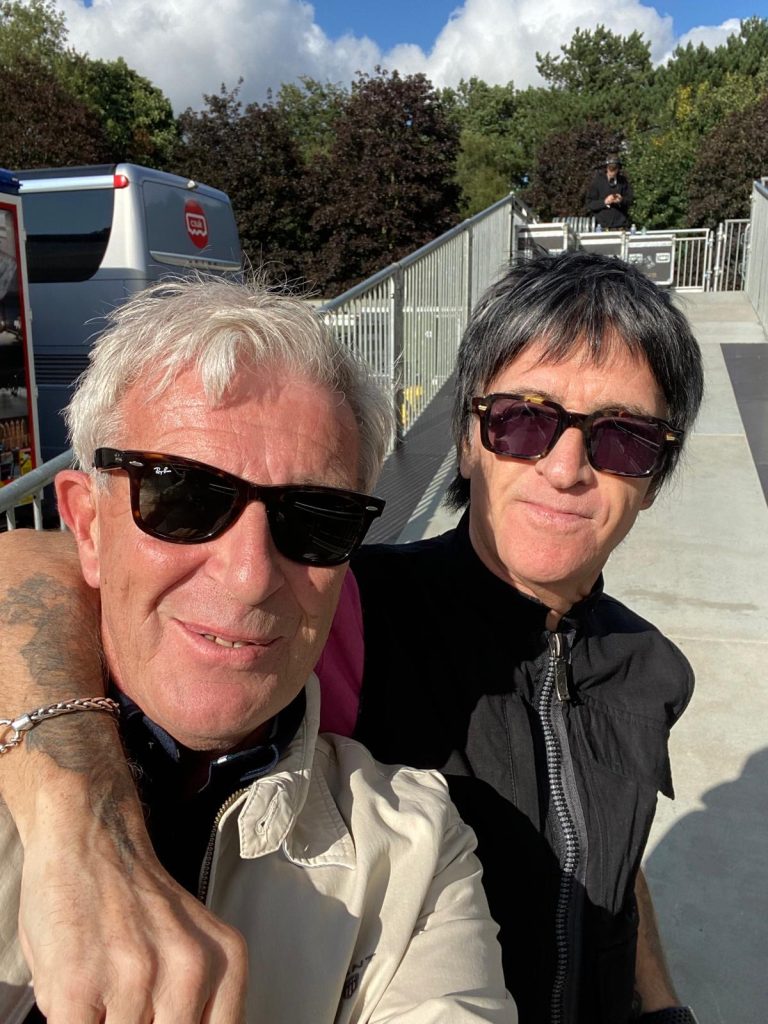
With The Fall no longer on the road, much of that restless spirit seems to have found a new outlet in The House of All. Featuring several former members, the group has been notably prolific, releasing four albums in a short space of time, alongside a steady touring schedule. How did the band come together following Mark E. Smith’s passing? And for the record, who’s in the current line-up? Do you revisit Fall classics in your live sets, or is the focus strictly on new material written for this chapter?
“So, after Mark’s passing, which was eight years ago, which is 2018… nothing really happened until I bumped into Martin Bramah, who was the original guitarist of The Fall at the very beginning and played the first gigs with The Fall. I’d been on tour with Martin. He was brought back into The Fall in 1990 for a world tour when Extricate came out. I shared a room with him for a little bit, but he got sacked when we were in Australia because he was going and sharing Marcia’s, the keyboard player’s, room instead. Mark got a bit jealous, I suppose. So anyway, Martin said, ‘How do you fancy doing this project?’ So that’s how it all happened. It’s Martin Bramah on vocals, it’s Pete Greenaway on guitar, not live though, just in the studio context. We’ve got Paul Hanley as a second drummer. We’ve got three drummers now: Karl Burns is number three drummer, I’m number one. All of them from different incarnations of The Fall. Steve Hanley is on bass and Phil Lewis comes in and plays on the live stuff for us, cuz Pete Greenaway doesn’t want to do it. It’s a great system, very much like The Fall. We don’t have any preparation. Just go in the studio, not even with fully formed ideas at all; we just come up with the music on the spot, all in three days. We’ve done four albums that way, all recorded in three days, and toured each album every year.”
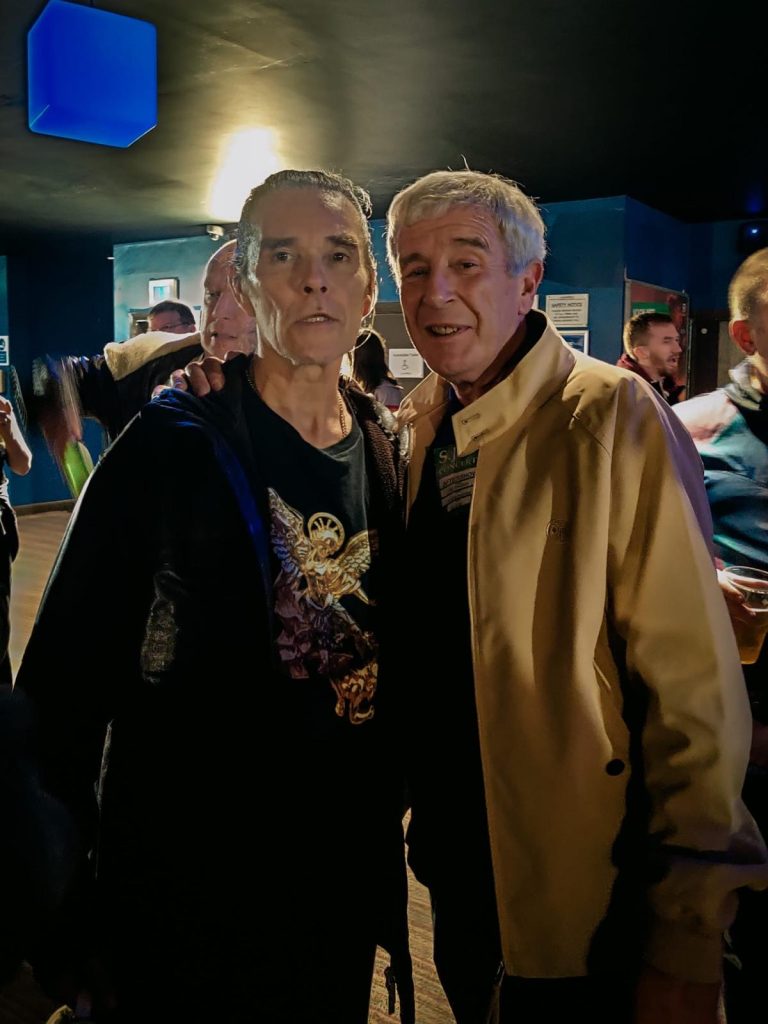
As a long-serving member of The Fall, you were behind the kit for a run of records that captured the band’s constant evolution, from the fractured groove of Extricate and the taut precision of Shift-Work to the sprawl of Code: Selfish and Cerebral Caustic. Looking back, which of those albums do you feel closest to as a drummer? Was it the material itself, the studio environment, or the way Mark E. Smith pushed the rhythm section that made them stand out?
“My favorite Fall albums… and the tracks too. My favorite one that I didn’t play on was This Nation’s Saving Grace (1985). I joined in ’86 and played on Bend Sinister. You know, I thought I was living the dream then, recording in big studios in London. Then we did The Frenz Experiment, which was okay, and we did I Am Kurious Oranj, which was a great album. Extricate, produced by Craig Leon, was a great experience. Cerebral Caustic and The Light User Syndrome were very different, but both were produced by Mike Bennett. My favorite tracks from Cerebral Caustic are Pearl City and The Joke. I mention this as it’s the 30th anniversary of Cerebral Caustic.”
Let’s return to The Fall: Future and Pasts at Band on the Wall. With the full line-up now in place, who else is joining you on the bill? Is there anyone you’re particularly keen to catch over the weekend? And on a note of intrigue, what exactly will Frank Skinner be doing at the event: performing, hosting, or something else entirely?
“Okay, so this weekend coming up, it’s The Fall: Future and Pasts Festival at the Band on the Wall in Manchester on the 5th, 6th, and 7th of June. It’s to celebrate 50 years of the band being together, after the Pistols played at the Free Trade Hall in ’76, which Mark Smith went to and got the idea he wanted to be a poet-stroke-writer-stroke-singer. And that’s how it all began. It’s going to be a great event. There will be some live music. It’s Steve Hanley, Paul Hanley, and myself on The Fall material. We’ve got a singer coming in called BC Camplight, Brian,he’s from America. Great, great artist and a very good musician. We’re going to be doing some tracks The Fall covered, including Mr. Pharmacist, There’s a Ghost in My House, and Lost in Music. Paul’s going to do the early ones that he played on. There’s all sorts of other things going on. The Fall fans Vic Reeves and Frank Skinner are going to be appearing. There is going to be some previously unseen film footage shown of The Fall. I’m going to be doing the Funky-Si A-to-Z of Manchester Tour—a walking tour of Manchester to all Fall-related places. 6.5k, 15 stops. It’s going to be really exciting. It’s a follow-on from my podcast, Funky-Si A-to-Z of Manchester with Jackie O’Malley, and it talks all about everything following my book that connects it to Manchester. You know, ‘A’ for Manchester Apollo. Poppycock are going to be on with the original superb keyboard player Una Baines, with underground poet Tamra Smith. She’s a great poet in the style of John Cooper Clarke. So, that’ll be good. It’s going to be great, so come on down and check online for exact details”
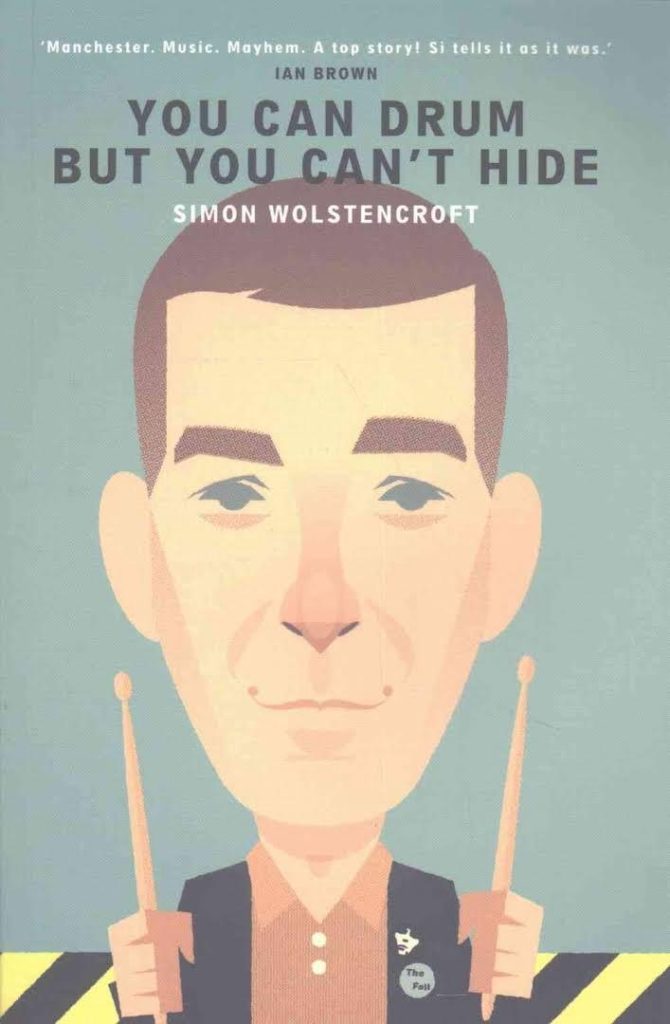
Finally Simon, I’ve read your book and it’s fascinating—no holds barred. What was your inspiration for writing this body of work?
“Right. I’d gone round to a friend’s house in Didsbury. He said, ‘Si, you’ve just been on TV on Mastermind.’ I said, ‘What?’ He said, ‘Yeah, you were one of the questions.’ He said, ‘Who was the first person to record drums with Steven Patrick Morrissey in The Smiths?’ And it was me. Thank God the guy got it right, it was a Scottish schoolteacher. It was a specialist subject on Steven Patrick Morrissey, so he knew his stuff. I just decided then, ‘That’s it, I’m going to start.’ The rest is history.”
Thank you very much, Simon, for taking part in this Q&A.
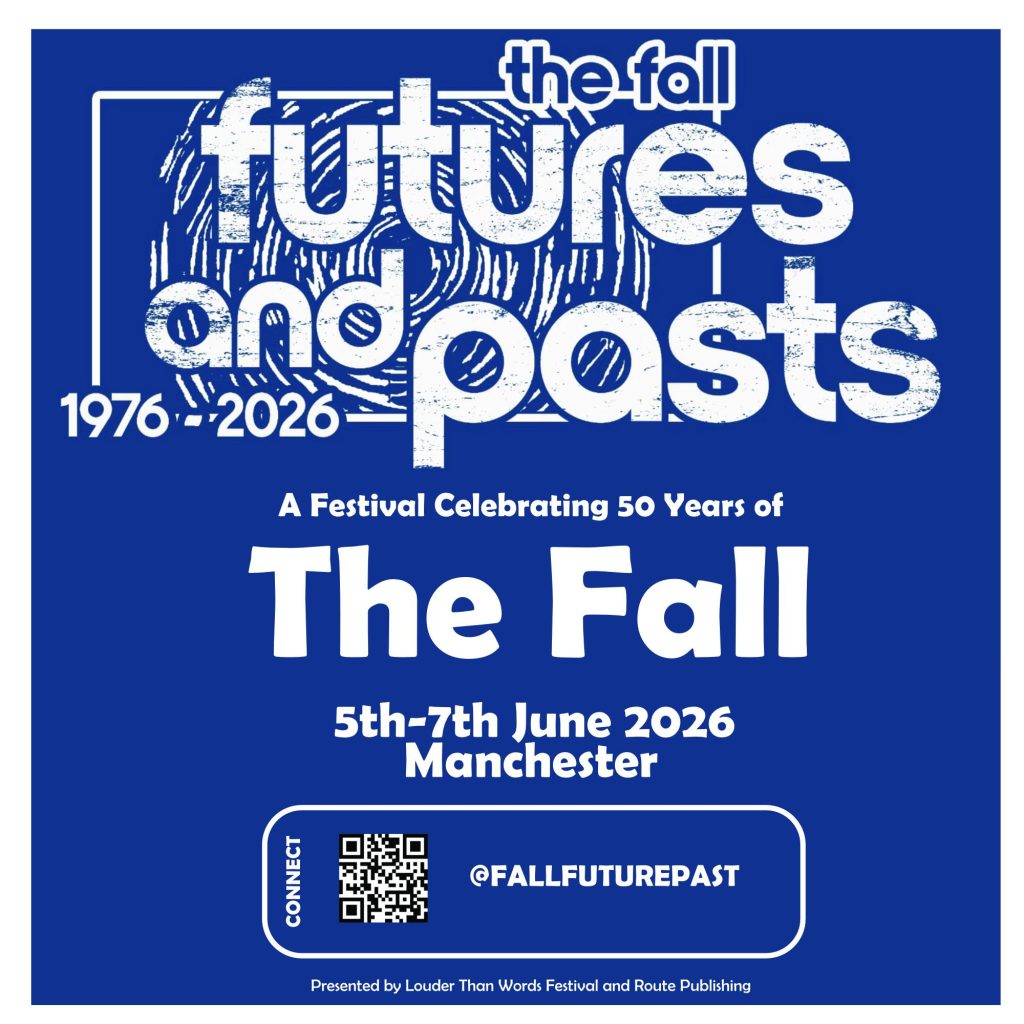
After another Long Island Ice Tea at The Alchemist, the mercurial Simon Wolstencroft left for home. While finishing my drink, I recounted all of my favourite albums by The Fall and became excited about the big event starting on the 5th of June at Band on the Wall. He has always been one of my favourite members of the band, and I have decided to go on his walking tour because he is full of so many interesting facts. I could not recommend this amazing show more. I will be there every night lapping up the atmosphere.


The Arrow Room, Rancho Cucamonga, CA - 29th March 2026

