Ghosts Among The Pines Drop New Single & Video “Holding On”
Alabama's Ghosts Among The Pines have revealed Holding On, the track is the lead single and video from the band’s…


Last year, The Menzingers were all over the place. Their third record, and Epitaph debt, On The Impossible Past was released to great fanfare. As the year came to an end, it graced countless top ten lists and for good reasons too: it’s a nearly perfect album.
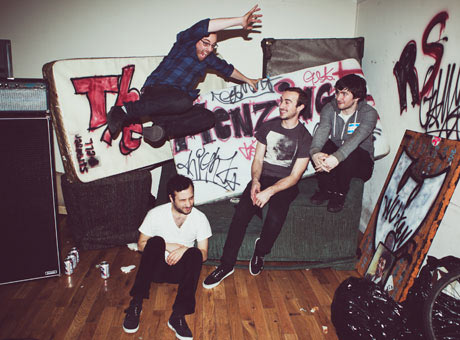
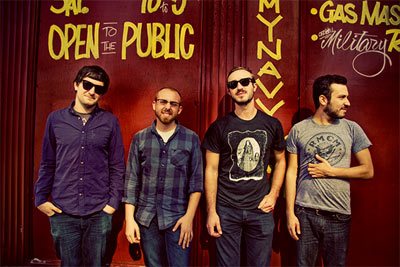
In support of the album, the band headlined Pouzza Fest and The Fest and shared the stage with the likes of Bouncing Souls, Propaghandi and much more. Their first tour of the new year saw them hitting the road with Hot Water Music and La Dispute. We caught up with frontman Tom May after their set when they played the Vogue theatre in Vancouver to discuss the tour, the album, and the future of the band.
Bobby: I guess starting with the basics, today is the second last day on the Hot Water Music tour.
Tom: It is, yeah.
Bobby: How was it?
Tom: Incredible. Amazing. I get to see Hot Water every night. The La Dispute guys are so cool and such a damn good band. It’s been really, really amazing. It’s like the fastest, full US tour we’ve ever did. It went by so fast.
Bobby: Any really memorable moments from it?
Tom: Every night was kind of memorable. We had a lot of fun. There was a couple times we got to hang out and drink with Hot Water which was really cool. Hear some old stories – that was definitely some of my highlights.
Bobby: I know on this tour you were trying to eat food that was famous to that region. Hot dogs in Chicago, Juicy Lucys in Minneapolis and so on. What was your favourite food discovery?
 Tom: Oh man. Discovery? I don’t know, we kind of just did the regular stuff. We ate poutine in Montreal, pizza in New York – that was good. Actually, the pizza place that we found in New York was really good, that was my favourite. I had this sausage pizza, it was fantastic.
Bobby: Lately you guys have been touring with a lot of big legends. Like you said, hearing stories with Hot Water Music but also Bouncing Souls last year, Propagandhi last year, you’re doing Pennywise and Face To Face in Australia in April. How are you setting up all these tours with all these legends?
Tom: I don’t know, they like our music and we just happen to be in the right place – like we’re available to do it. All that stuff is kind of changing. Sometimes the bands pick, sometimes the booking agent picks. But yeah, we’ve been very fortunate. It’s fantastic.
Bobby: Is it kind of surreal to be watching these legends every night?
Tom: Totally, we get to come up and like sing with them and play with them – it’s crazy.
Bobby: What’s the biggest lesson you’ve learned from just talking and hanging out with those guys?
Tom: Probably just to stay friends with each other. Stay friends with your band. Yeah, I would say that.
Bobby: At the same time, you are also becoming incredibly important in the punk scene yourselves – especially after On The Impossible Past. Were you kind of surprised at the reaction to it?
Tom: Yeah, people really, really liked it. Obviously that’s what we wanted. When we put out a record, we want people to enjoy it and it’s been pretty amazing, the response so far.
Bobby: To me, I think one of the major reasons for the success if the lyrical content of the album. I mean the instant connectivity that you have through it is impressive. Even though what you have is sometimes very specific – like I have no idea where Ava house is, the Sun House Hotel, the Paupak cliffs are. So it’s very specific yet it’s instantly relatable anyway. How do you balance that?
Tom: Well I think that people just want to hear things like that. Like I personally want to hear something that is so personal and specific to you that everybody has a place like that, a place similar to the one that we mentioned. It kind of gives a character to the songs and people like to relate to that.
Bobby: The album also has a somewhat nostalgic vibe to it, but you guys have said before that you don’t want to live in the past but you want to tell stories about the past. Is there a difference between the two?
Tom: There’s definitely a difference between the two. If you’re stuck in the past and you didn’t learn anything from the past and you wish you were in the past – that’s kind of a miserable existence I think.
Bobby: Even that is built in the title itself. It’s from a quote from Vladimir Nabokov’s “Lolita” – “I was weeping again, drunk on the impossible past.” Do you think there is a risk of just getting stuck, reliving and regretting the past?
Tom: Yeah, there’s totally a risk for that.
Bobby: How do you escape that?
Tom: I guess learn from it and go forward, don’t try and get too lost in it.
Bobby: Do you think playing these songs that have this kind of nostalgic element night after night; are you ever able to move past the stories in them?
Tom: Totally. You can always relive that emotion that you experienced at the time. While you’re playing the song, that’s what it feel likes and that’s what it is for people listening to it. But you definitely don’t have to be in that mind set all the time, that frame of mind. It changes, you play the songs so many times that sometimes you just forget what you’re saying and you have to get reminded.
Bobby: Do you think it kind of loses its meaning to you personally after playing it over and over again?
Tom: Maybe once in a while, but not all the time. I mean, there’ll be sometimes where you’re playing a song and it’s just kind of going through the motions. But that’s not very often. We try really hard never to do that because that’s just not fun.
Bobby: So how do you make it fun again?
Tom: You just put your heart into it.
 Bobby: I remember where you did an interview with Wasted Opportunities where you said that one thing you wanted to do going from Chamberlain Waits to On The Impossible Past is that you wanted to create a complete album. Can you expand on that?
Tom: Yeah, we wrote all the songs at the same time, we didn’t say “okay, we want all the songs to be about this” or “we want all the songs to kind of have this vibe” but we sequester ourselves in a living situation that we’re normally not in and just spent the entire time just hashing the songs out. So they all kind of ended up being a collection that was all written over the same period. With Chamberlain Waits, we had a bunch of songs that we wrote at different times and we kind of went for it.
Bobby: Do you feel that people have, in some ways, kind of lost the idea of a complete album? With iPod shuffles, iTunes, instant gratification type of thing. Do you think people have kind of lost it?
Tom: I don’t know, maybe. I don’t know if it’s really any different if you think about it. They’ve always sold singles and people always listened to the radio and didn’t necessary listen to the full album. Maybe in the pop world they’ll make a record that is just full of hits or whatever; but I don’t think people have really lost that idea of making a cohesive album.
Bobby: What are some of your favourite records that you consider to be a complete album?
Tom: London Calling by The Clash for sure. Boxer by The National. Every time I listen to that record, I just have to listen to it front to back. What’s another really good one? Soviet Kitsch by Regina Spektor is perfect. A really good collection, it flows so great. Those are definitely full albums that I love.
Bobby: And what do you think makes them full albums?
Tom: I don’t know. I guess it would just be the way that you’re always anticipating them. It’s like a roller coaster but you’re on the same track the whole time. You’re just anticipating the next song. That’s really it for me anyway. I listen to one song and go “oh wow, that was a great tune but now this one is next, Ihave to listen to it.”
Bobby: I want to talk a bit about On The Possible Past, which you just released on vinyl in November after having released on cassette with On The Impossible Past when it came out. What made you decide to release the album of demos in the first place?
Tom: People just started telling us that it was worth it. We just thought it was just demos but we don’t really do that many fun things and that was a really fun thing to do – put the acoustic demos on vinyl.
Bobby: I remember a few years ago when Against Me! started re-releasing all their demos. Total Clarity, The Original Cowboy, Black Crosses and so on and so forth. They kind of got – like they always do – for basically just re-releasing the same album a year after it was just released or whatever. But their philosophy was “we have these songs, they’re different than the ones on the album – why not put them out there instead of hiding them?” Do you think it’s good to get what you have recorded out there?
Tom: Yeah, it’s fun if it’s good. People enjoyed listening to it and I enjoyed making it.
Bobby: And, like you said, you made the demos in a rather unique way with them all recorded in various bedrooms and stuff like that. Kind of like what you did with Kentucky Gentleman for Hold On Dodge. Do you like recording in bedrooms?
Tom: Yeah, it’s a lot of fun. We still do that all the time, that’s how we still demo our songs.
Bobby: Does that bring any challenges?
Tom: Yeah, I mean we’re not engineers or anything – you know what I mean? We kind of just wing it. Sonically, it’s just kind of very subjective. But yeah, no – it’s fun. There’s nobody pushing you, there’s no pressure so maybe the sounds not that good quality; but at the same time you have more time and space. And also you’re not in the frame of reference that anybody’s going to hear it. So you’re like “I don’t care if anybody’s going to hear it, I’m just going to make it for myself and see what happens.”
Bobby: Gives you a bit more freedom.
Tom: Yeah. Plus you get to hear the songs and re-write them. Get a better idea of where they’re going.
Bobby: Also it gives them a unique quality. Like have you heard of the Switchboard Sessions?
Tom: No.
Bobby: The guy does all the interviews over the phone and then he gets them to play a song acoustically over the phone. Like Against Me! premiered a new song on it, he just got Brendan Kelly and Joey Cape.
Tom: That sounds pretty cool.
 Bobby: The sound quality’s not that good because it’s from a cell phone to a landline – but why do you think people are drawn to that unique sound format?
Tom: Because it’s personal and it’s intimate.
Bobby: After this tour, you guys are only doing a few weekend tours until you hit Australia with Pennywise. And you said that you’re doing that so you can start work on the new album.
Tom: Yeah, we’re starting to write. Over the next three months we’ll have the new album.
Bobby: Have you started writing the new album yet?
Tom: Yeah, we have a few basic demos that we’ve started to circulate between each other. We have, I think, one full band song pretty much all worked out.
Bobby: You’ve said before that, especially for On The Impossible Past, you went back to Scranton to get back into that vibe and atmosphere again. Are you doing anything else like that again?
Tom: We’ll see, I don’t know. We have a practice space in Philadelphia so we’ll be down there writing it this time.
Bobby: Somewhat random topic, but have you hear the new Bad Religion album, True North, yet?
Tom: Yeah.
Bobby: You know the song Fuck You?
Tom: Yeah.
Bobby: That song’s kind of all about the need for, sometimes, just a simple chorus and the need to say “fuck you.” Two of my favourite Menzingers songs, The Obituaries and A Lesson in the Abuse of Information Technology because they both have great sing-along slogans. What do you think these sing-along slogans kind of bring to a song?
Tom: They’re a lot of fun to play live. People really like to sing along and it’s also a simple idea that carries weight to it. I mean when you read a book and you see a simple line or a poem that has a simple line in it, it carries a lot of deeper meaning and thought to it. It’s not like an extrapolated idea that is four pages long, it’s just one simple idea that you can just kind of extrapolate about in your own brain.
Bobby: Thanks a lot, do you have any final thoughts that you’d like to add?
Tom: Nope, that’s it – thanks.


