Ghosts Among The Pines Drop New Single & Video “Holding On”
Alabama's Ghosts Among The Pines have revealed Holding On, the track is the lead single and video from the band’s…


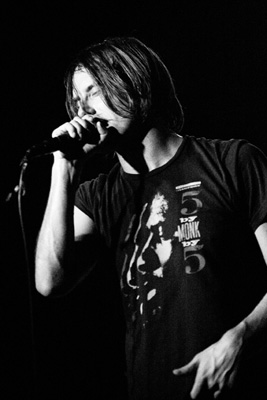
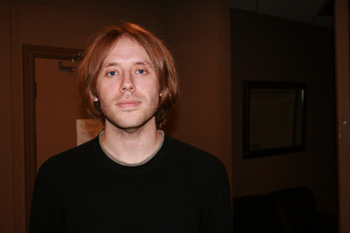
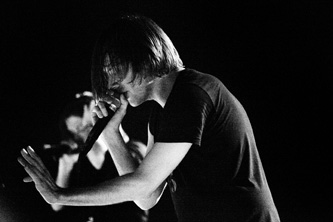
For my second interview of 2009, I sat down with Geoff Rickly of Thursday before they hit the stage for the Taste of Chaos tour. Once again, Geoff was very open and answered the questions quite enthusiastically which enabled us to talk about the tour, their split with Envy, Common Existence, The United Nations and Watchmen.
Bobby: I guess starting with the basics, this is the final leg of the Taste of Chaos tour with less than a week to go on it, how has it been?
Geoff: It’s been really interesting. We’ve never played for such a young audience before. There’s been a bunch of great shows and there’s been about ten kind of crummy shows so I’d say ten out of fifty ain’t that bad.
Bobby: Yeah, my friend saw you guys in Calgary two days ago. He said it was weird, that he had never seen so many thirteen year old girls scream for a metalcore band.
 Geoff: Yeah, it’s a whole new thing, little girls who love metalcore. I had no idea they existed. I had heard Bring Me The Horizon and I was like “I wonder what their fans are like?” I would never guess that it would be all little girls in bright neon clothes. You know what I mean?
Bobby: Yeah, he said it was like a Backstreet Boys show. He’s never seen that many girls screaming for the singer.
Geoff: It’s crazy right? Yeah, it blew my mind because all the bands that I think that they’re sort of going for are all bands that thirteen year old girls don’t like. It’s really interesting. Like “oh, you put some cute English guys in a band that sounds like that and you still get all the little girls.” You know what I mean? It totally blew my mind; and that’s not saying what they’re doing inherently as a band, it’s just “wow, that’s who likes them.” If I could sell an extra thirty thousand records to little girls in neon hoodies without doing anything, I would do it; so I can understand why. *laughs*
Bobby: Has there been any really memorable moments from this tour?
Geoff: Oh yeah, there’s been some really good ones. I turned thirty on this tour in Baltimore and that was really fun. All my friends were around and brought out a cake and stuff, that was a lot of fun. The Worcester show was incredible, New Jersey show was great. New York was really special, LA… there were a bunch of great ones. There were some really, really unexpectedly fun ones. We played, I think it was San Antonio, it was outside and it was just like this amazing day, like perfect day, and all the kids came out from Mexico and were super stoked so that was really fun.
Bobby: On March 2nd, when you guys played in Providence, Rhode Island you guys played the entire Full Collapse…
Geoff: The show got cancelled.
Bobby: Oh? It did?
Geoff: Yeah, it got snowed out. We still haven’t done it, we’ll have to do it again still.
Bobby: There’s a few things I want to talk about but first I want to talk about the split with Envy that come out on November 4th after quite a lot of speculation. It took a while before it was actually announced concrete that it would be coming out. Were you glad to finally have it out there after all the speculation?
Geoff: Oh yeah. It’s one of my favorite releases that we have out there. I really love it and we’re already making plans to go to Japan with them and for them to come over here with us. I just really feel that they’re one of the bands that don’t get a lot of notice but they’ve been quietly revolutionizing hardcore for like the last ten years. So getting to share that and have mutual respect, band to band, that’s a very proud moment for me.
Bobby: How did you get in touch with them? Who’s idea was it to do that split?
Geoff: Well, all our friends growing up – like Saetia, Hot Cross and You and I and all these bands, they used to run a record label called Level Plane and Level Plan put out some Envy records. So they gave me stuff like years and years and years ago and finally I saw that they were playing so I went to go see them and there was a whole fest by Temporary Residence. Explosions, Mono, Raging Bull, Young Widow – those kinds of bands. I met Jeremy who ran the label and I told him how much I loved Envy and I thanked him for bringing them to the States because I knew he had paid a lot to get them to come to the States and I mentioned I was in this touring band called Thursday. He was like “you know there’s another band called Thursday?” I was like “that’s my Thursday.” He’s like “oh shit, you’re so nice. I never thought you’d be the singer of a big band. Awesome.” And then he hooked it up and we stayed in touch and we talked about doing tours forever and eventually it was like “hey, we’re out of contract, let’s do a fucking split!” Just having such a beautiful vinyl release was really exciting for us too, you know?
Bobby: That was one thing I wanted to ask. That release was vinyl and CD as a package. You couldn’t just get the vinyl or just get the CD, you had to do it together which you guys said meant that some major stores like Best Buy, Wal-Mart, Circuit City wouldn’t be carrying it. Was there any threat with having only mom and pop stores backing it?
Geoff: Well the thing that we were thinking were was like – well there were two thoughts. One was as far kids getting to check out Envy, they’ll be downloading it anyway. They’ll all end up hearing the band that we’re doing the split. So in that way we win by getting Envy more exposure. But if you actually want to buy it, you have to go and support an independent record store which I think is a really great thing because it’s so much harder to run an independent. You don’t have a whole chain budget to keep you afloat and also indies put their heart and soul into it, into record stores. We could do two great things at once, we could get this band a lot of exposure and we could also support independent record stores. That was a lot of fun. And it was just great too because we sold out of all the limited ones within like one week. It was one of those things that we were like “that was done perfectly.” It just turned out great. Temporary Residence, they’re all really smart and gnarly. They just signed Pinback yesterday so I’m really psyched for them.
Bobby: The EP came out on November 4th, which was a very historic day for the States because that was the day President Obama won the election. You guys posted a picture on MySpace that day which said “I Voted for Obama” which received a lot of feedback from fans – both good and negative. Were you guys surprised to get such a strong response from just one picture?
 Geoff: Yeah. I mean because it wasn’t “You should vote” it was “I voted.” We realized everybody in the band voted for the same person so we’re like “fuck it, let’s put it up.” It was really interesting because if I see somebody put up “I Voted for John McCain” I’m going to go “okay.” Like I don’t really agree with them but I’m not the type of person to send hate mail so it was really interesting to see. And also the funny thing was our producer, Dave Fridmann, said “Dude, you’re fucking Thursday. You wrote “War All The Time,” who thinks you’re gonna vote for John McCain? Did they not get the point of that whole record?” I thought that was a funny thing to say even though there’s a lot of different reasons why people vote for who they vote for. But it was interesting to see how much kind of crazyness came out of just that one thing.
Bobby: When you guys explained the reasoning behind posting it, you mentioned how many people believe that musicians shouldn’t express their political views because it’s not their place; but you said “music shouldn’t be an escapist fantasy into a holographic vision of euphoria, where responsibility to our fellow man is left behind.” but do you think that talking about politics can sometimes alienate some of your fans?
Geoff: It absolutely alienates some people but I think everything that you do is a choice. So why pretend that you’re everybody’s friends? You decide what you’re about and stick to it and then the people that like you will like you and the people who don’t like you won’t like you. I’m not really a fan of trying to win over every single person because that just ends up being bland. You’re a robot that believes in nothing except for having more fans and I don’t want to be in that kind of a band.
Bobby: At the same time, you guys have always been a very intelligent band and known for singing intelligent lyrics based on books and stuff, it’s not like you were always singing about girls or farts so it’s not like making that political statement is such a big surprise for a band like you.
Geoff: Right. We obviously think about those things. That’s the thing, we’re not the type of band that says “fuck you” if you don’t agree with us. You know what I mean? I just encourage that you say what you mean and so if people come to us and say “this is why I voted for McCain” and if they have good reasons, like they’re intelligent then that’s cool. I’m glad you’re thinking about it. This should be something that we talk about. Because to me, music isn’t a one way street. It’s not what we say goes. It’s we say something, you say something back, we say something back.
Bobby: It’s a conversation.
Geoff: Yeah, and to me, that’s always been one of the main goals for Thursday, to make it a community based band than like a bunch of rock stars telling you what to do.
Bobby: Like I said, you guys have always been known for insightful and intelligent lyrics. Even your new album, Common Existence, has songs influenced by books like Denis Johnson’s Resuscitation of a Hanged Man, Martin Amis’ Time’s Arrow and poet Roberto Bolano. Why did you decide to take this route and do the more intelligent lyrics and book based lyrics?
Geoff: Well, it’s always been a part of the Thursday stuff and this time it just really felt like I just wanted to dive in. It was always something that we put in slowly but this time I just really wanted to dive in. I really wanted it to be surrounded by all the great literature that I love, you know what I mean? I think that there are other bands that do stuff like that and I just felt that’s what had been moving me lately, even more than personal experiences; it’s just great well of ideas. I think that’s really inspiring, when you take all the ideas that people have and talk about them. I think that’s a great part of life.
Bobby: Examine what you’ve been given instead of just taken it as you’ve been giving it. Just kind of explore it a bit more.
Geoff: Yeah and not just take everything like “well, this happened to me, this is how life is.” Examine it. Like, “well this happened to this person and they said maybe there’s no God and this person said ‘no, everything in science can’t explain how there could be no God.’” You know what I mean? I think all these different ideas that go back and forth, that’s really where you find out about life. It’s not about what you learn personally, it’s about what humanity as a whole has learned. I just find it really interesting.
Bobby: On the album you guys have the song As He Climbed The Dark Mountain which was also on the split with Envy. Why did you decide to release it on Common Existence too?
Geoff: Well we had other songs that we didn’t put. We had about four other songs that we kept off Common Existence. So people were like “I guess they ran out of ideas” or whatever. It’s not even that, it’s just that to me it belonged on the record. Without it, it was a very different record and since we wrote it originally for the record, we wrote so much of the record around that song – we wrote transitions in and out of that song – that it belonged to it. We could just do a ten song record and leave it off but it won’t be as good. To me, I feel like I have tons of great ten song records but this one, it should’ve been there. So we left it.
Bobby: Back on October 3rd, when you were still recording the album, you guys Twittered “Tracking an eight minute free-form epic. Be afraid.” But on the record there is no eight minute track, what happened to it?
Geoff: That song’s called Stay True and we will eventually release it somewhere, it just didn’t fit on the record. We decided it was between You Were The Cancer and that as a closer and so we were like “let’s close with You Were The Cancer.” Stay True is much more sprawling, it kind of goes out into nowhere whereas You Were The Cancer is very sculptured. So in the end we decided to keep it off, but it will surface. It’s called Stay True, you are the first one knowing what the title is.
Bobby: The last time I talked to you guys, it was a few years ago at the Taste of Chaos and you had just finished recording A City By The Light Divided. You said you had cut another eight minute long song which had tons of guests including the Blood Brothers, so will that song appear soon?
Geoff: That song got cut down and all the guest appearances got taken off of it and now that’s Last Call. That was originally recorded for the other one but it had a bunch of guests on it and in the end it wasn’t working right. Dillinger and Blood Brothers and Blackout Pact, it really didn’t mix the way that we thought it would.
Bobby: Will anybody ever hear that original version?
Geoff: I think some of those tracks are flying around. It’ll probably end up on file sharing sites and stuff like that.
Bobby: Why did you decide to work with Dave Fridmann at Tarbox Road studio again?
 Geoff: We just really loved the sense of empowerment and freedom that he brought to the band. Every time we would start to kind of stick to a Thursday formula, he would break us out of that habit and he would say “you feel comfortable, don’t feel comfortable. When you feel comfortable, that’s the end of creativity.” It wasn’t even about that we wanted it to sound like City – we didn’t want it sound like City – we just wanted to have that same ally there. In contrast actually, we wanted it to sound completely different than City so we were like “I don’t know, maybe we shouldn’t go with Dave because we don’t want it to sound anything like that record.” That record was that record, now we want something different. We talked to Dave and he was like “yeah, let’s do something totally different. I’ll do it with you guys, we’ll make it totally different. We’ll put the drums in a different spot, we’ll record everything differently. We’ll make it loud, we’ll make it heavy, whatever.” I was like “yeah, but I even want the vocals more in the front;” on City they’re kind of in the back a little. He’s like “yeah, we’ll fucking crank up the vocals, do it completely different.” And he did. He did it completely different than City of Light. It still has his trademark on it but it’s not the same kind of record at all. City’s almost like a pop record where everything’s sort of crunchy but pretty. Everything’s pretty, everything’s got… almost like the Cure kind of thing. Whereas Common Existence has more ugliness on it. It has a little bit of grime.
Bobby: More raw.
Geoff: Yeah, a little bit more raw.
Bobby: It was recorded over three different recording sessions instead of all at once. Why did you decide to do it that way?
Geoff: That’s the way that Dave works. Since it’s just him, he doesn’t have any engineers or anything, he doesn’t like to get his head too far into one thing. He goes two weeks with us, two weeks with the Flaming Lips, two weeks with us, two weeks with Ok Go, two weeks with us. So each project is fresh every time we come in. And also, the great thing about that is in those two weeks break we’re going “hey, you hear that part that goes like this. You’re going here, you should be going down a step.” “Oh yeah, I didn’t know why that part sounded wrong.” You can fix all the mistakes, come back in and you’re ready to kill it.
Bobby: You have more time to sort it out and try it out.
Geoff: Yeah, and I get to go like “I’m singing this here but really this line would be better because that’s not really what I want to say” and cross that out.
Bobby: You guys also had Tim from Rise Against come and sing on Resuscitation of a Dead Man. You guys are of course good friends with Tim having toured with them many times, what was it like going into the studio with him?
Geoff: It was so cool and unexpected too because it was one of those two week break periods and I was home in New York and Steve’s brother works at a studio in Harlem and I was going to go in and do some vocals. The night before I went to see Rise Against and I was joking around like “dude, you should come sing on a song with me.” He’s like “yeah? Tomorrow.” He worked everything out so that he could come. He even didn’t go back to Philly with the rest of the band. He came with me and got into the studio and the great thing was I had an idea for him and he’d get in there and start singing whatever he wanted. We’d be in the control room yelling “yeah, that’s great!” Or “no, no, no, do something else.” I love his voice, it’s so raw, it’s so good.
Bobby: You guys also had Walter Schrieffels of Quicksand and Gorilla Biscuits sing in Friends in the Armed Forces, what was it like working with him?
Geoff: Well we’ve toured with Rival Schools and grew up on Quicksand. You can tell there’s a huge Quicksand influence on that song already. We were talking about like how great it was to have a little of the Quicksand stuff back in our sound again and I was just home in New York and I was going for jog and Walter was jogging. He had been in Berlin for the last year so I was really surprised to see him in my neighborhood but he moved back and we were just talking and hanging out. We said “let’s go get a coffee,” so we went and got a coffee and I was like “dude, you gotta hear this song, I totally, totally used some Quicksand tricks in it. It totally sounds like Quicksand.” He heard it and he was like “it totally does!” I was like “you should do some vocals on it, dude. I would love to hear you sing something like this again” and he’s like “yeah, I’m in.” So we took the train up to Harlem and put some vocals on it.
Bobby: For the song with Tim, Resuscitation of a Dead Man, that was the first single and you guys filmed a video of it which had a whole bunch of pyrotechnics which you guys have said were live and burned you guys.
Geoff: This is my new sweater that I got for Christmas because my other sweater had holes in it from the fire.
 Bobby: What I was wondering was at the end, all the amps are engulfed in flames. Was that real too? Did you actually light the amps on fire?
Geoff: Yeah, that was real. We only had one chance to do that and after that, it was done because the set burned down. We were like “alright”
Bobby: Hopefully that worked!
Geoff: The director was like “it worked! It looks amazing!” It was sketchy because we didn’t have real pyro guys doing it, so we were just basically playing with fire like a bunch of arsonists. *laughs* It wasn’t a trick, we were just lighting shit on fire.
Bobby: Back in November when you guys started announcing information about the record Common Existence, you did it very cryptically. You did an odd medley called “Black Smokem” a weird video and a countdown that counted down to the release of the single. These very cryptic messages instead of going straight out and giving the information. Why did you decide to go the cryptic route?
Geoff: Just because I feel like Thursday… if you come to a Thursday show you can just walk up to us and talk to us. If you follow us on Twitter, you know what we’re doing every day. There’s just so much information about us all over the place that we thought that it would be fun to not give any details, just make everything really cryptic where you actually have to wonder what it is.
Only one of the problems that I see with modern social networking and promotion is you know everything that’s going on from everybody all day long, so where’s the mystery in that? I’ve always felt that mystery can be this great component of music and art. Like the mystery behind Joy Division. Nobody knows anything about them because the singer killed himself before he ever even came to the US. Even now that’s a shame, there’s these huge unanswered questions about them that makes their music so heavy. I think even just a band like Brand New was smart enough to decide not to do interviews anymore after a while. I was like “why? Why would they not do them?” It was like “oh, because this record is really dark. If they don’t do any press for it, you just wonder what the fuck they’re thinking.” You always do. I think that’s really smart. Bands that have realized how oversaturated the culture is, they know what they’re doing.
Bobby: Yeah, everybody wants to know everything. They don’t let their imagination come up with the ideas themselves. There’s no surprise anymore, it’s just all laid out for you. Even like you said, with Twitter, updating every hour what you’re doing. You don’t need that.
Geoff: Yeah, you totally don’t need that at all. It can be fun, it can’t be fun; but there’s the other side of it.
Bobby: The big deal about this record was that it was released on Epitaph. I’m not going to ask you why you signed with them because when you did sign with them, you made a very clear explanation of why you signed with them. But you did say something that I do want to touch on. You said that Mr. Brett wasn’t looking for you guys to “return to form” and go back to Full Collapse and remake that. He wanted you to push your boundaries and continue to make music you wanted to make which was one of the main reasons you signed with them. But lately there’s been a big trend of a lot of bands saying “we’re going back to form, going to back to this record.” Why do you think that is?
Geoff: Because I think they see the one record that sold the most and they want to sell a lot of records and be popular again. I understand that but I see a band like the Flaming Lips who have been around for twenty five years. They had a hit record and they never tried to go back; instead they come out with Soft Bulletin, they came out with Yoshimi Battles. It took them fifteen years and a whole bunch of records that people didn’t like in between but if you keep pushing, eventually you find something new and that’s better than the watered down version. Because nobody ever does… like Botch couldn’t do We Are the Romans Part 2 and have it be better. Refused couldn’t come back and do The Other Shape of Punk That Could’ve Come and it wouldn’t be better. It would just be maybe okay, maybe good, maybe it would be fast still; but it’s never a true return to form. The only way to return to form is to do something exciting. You just have to keep on believing and working with passion and love and do it for the right reasons and try not to think too much about how broke you are. *laughs*
Bobby: Like you said one good thing about Dave was that he kept trying to push you. When you did get comfortable going into a Thursday sound, he said “no, get out of that.” If you try and remake that sound, you just keep remaking the same record over and over again. Do you think it’s important to push your boundaries and grow as musicians instead of going back to the safe routine?
Geoff: Yes, absolutely. This is the other thing: going forward doesn’t mean you slow down and write ballads all the time. To me, we went forward on this record but Resuscitation of a Dead Man is still obviously a punk hardcore song. It’s a post hardcore, it’s a heavy song and in some ways its heavier than Full Collapse because we can play better and we’re playing faster and digging in more. It’s more how I feel about heavy music now then how I felt about heavy music back then. To me, it’s like you will never be who you were. You just have to be true to who you are now. Maybe people won’t like me as much as when I was a kid. It’s true, maybe they won’t. Maybe nobody will like this record – hypothetically, I know a lot of people do like this record and I feel really good about – but if nobody likes this record, it wouldn’t change the fact that this is the realest record I could have made right now. So you have to always try and stick to that. I think, in the long run, that’s what separates a great band from a flash in the pan band. You have to stay true, you really do. No matter how much it hurts to lose fans or whatever, you have to stay true to yourself or else its nor worth doing.
Bobby: You have to make music you like, that you want to hear, instead of making it for your fans, what you expect they want to hear.
Geoff: Right and I’ve heard so many people say “oh, they did a record for themselves and not for the fans” and the thing is the only way you make a record for the fans is to make a record that you love so much but that is infectious. That other people love. You can’t write it for someone else, that doesn’t work because then it’s just a cheap trick. I mean, I love the band Cheap Trick. It’s just literally a cheap trick that you’re pulling on people.
Bobby: There’s actually another big trend in the industry for bands to self release stuff. There’s the major bands like Nine Inch Nails and Radiohead but also in the independent scene like Less Than Jake, Punchline, Pulley, bands like that. You guys have had lots of troubles with labels, both major and independent, with them wanting you to act a certain way, and be the poster boy for a certain movement. Do you think it’s important now for bands to have control of their image, their sound of how they promote themselves instead of being told how to promote themselves?
Geoff: Well I think the great thing about bands releasing their own music – it’s not like everybody needs to release their own music – but it is shifting the power dynamic where bands don’t need labels anymore, labels need bands. I think that’s great because, I don’t know how it was before, but on Epitaph now we get treated so well and it does really feel like, well, we could do it ourselves. So we have a good partnership with a lot of understanding that it’s not we need them to survive. I think it’s because of bands like Nine Inch Nails that release their own stuff that it does change. You’re not a slave to the record label like in Motown days, those artists were all slaves. I think that’s a great thing that happened. Maybe it’s also because nobody’s actually selling records that the labels don’t have as much say.
Bobby: Next Tuesday the fourth Atticus compilation comes out and its’ been four years since the last one. Of course, back in the day there were always this great compilations, Punk-O-Rama, the Fat Series, Hopelessly Devoted To You – these great punk compilations that came out every year. But now not so much, why do you compilations have kind of gone away and what were some of your favorite compilations?
Geoff: I think compilations have gone away because they’re expensive to make and I think all the money is gone from the music industry a little bit. It’s expensive to make a comp, it’s much easier to do an online comp and just send people music. It’s really funny that it has gone away. There’s a great compilation that just came out in the indie rock world called Dark Was The Night. It’s a whole bunch of indie bands. I’ve always thought that the best compilations always went to a charity because it’ll be a whole bunch of people putting together new music so that they could help something out. That was always exciting to see a bunch of bands putting out new music together. I don’t know, you don’t see as many comps as you used to.
Bobby: Okay, just a few more questions. You have, if I’m not mistaken, just started a new label called Collect Records.
Geoff: Yeah, yeah.
Bobby: You guys are releasing a new record from Touche Amore soon. Does that mean that Astro Magnetics is done or what?
Geoff: Astro Magnetics became a part of Eyeball, we put the two labels together and Collect is only going to be vinyl. It’s just vinyl, no CDs, no nothing else. And yeah, we did the United Nations record and now we’re doing the Touche Amore vinyl. We might do this Japanese artist called World’s End Girlfriend who did a collaboration with Mono which was really, really awesome.
Bobby: You just brought up United Nations, you guys have had a lot of legal troubles with them. With the name, United Nations, and also with the Beatles artwork. Do all these legal troubles become annoying after a while?
Geoff: It is totally annoying. I think the thing is, people just need to calm down and have a sense of humor. I mean, it’s obviously parody. Nobody’s buying our records thinking they’re getting the United Nations. You don’t buy a record and go “Oh, this is like twenty countries” – you know what I mean? “I don’t even need to go to New York anymore to see the building because I have the record!” *laughs* So I just think it’s sort of silly. I honestly think that it was just because there was so much hype so fast that they bothered us. I think now that things are calming down, they’ll probably forget about us. So our tactic, our legal tactic, has been to ignore them and not answer them at all. *laughs*
Bobby: And hope it goes away.
Geoff: Yeah, hope it goes away. Cause they took down our Myspace, they took down our Facebook and now that they’ve done all that, I feel that they think that they’ve got something done. So we’re just trying to wait for a little while and we’re going to do a seven inch for Deathwish when I get home from this tour. Hopefully that just balances everything out and we don’t get bothered anymore.
Bobby: One more question, you recently did an interview with Marvel Comics where you went on about how much you loved comics growing up but you also mentioned that lately you read a lot of graphic novels and one, of course, was the Watchmen. Have you seen the movie? What did you think of it?
Geoff: I did see the movie. I thought the visual aspect of it was really cool but they tried to do every single thing from the comic book basically and all the scenes were so short because they were trying to fit everything in that you never really cared about any of the characters. You never really got the emotional impact of the graphic novel which was heavy. Because it was about the cold war and I think one of the most important parts of the graphic novel was all the different layers of tension going on. There was the guy at the newsstand talking about the news and then there was the comic book that was so dark. The pirate ship comic book thing; and then you had Ozymandias who was talking about seeing all the different angles all at once. So when you take out all the different angles and all the different views, how do you get that same view of the world?
Bobby: I was wondering how they would get the newspaper man in it because that was like a cornerstone of the graphic novel.
Geoff: Cause I think that was the most emotional relationship in it. You had the poor kid who couldn’t afford the comic, you had the street vendor was who kind of an asshole and maybe sort of racist but also cared enough to let the kid read everything. You had this really complex world view of people who had both good and bad in them. It’s one thing when you have good and bad – like the huge good and bad, the superheroes – but it was important also to see the everyday average person on the street being good and bad. So yeah, I mean, I thought the actor who played Rorschach was great but there was a bunch of things. I thought the sex scene was insanely bad, just so awkward. I was like “oh please, don’t go on anymore!”
Bobby: Okay, I guess that’s about it. Thanks a lot, do you have any final thoughts you’d like to add?
Geoff: Just thanks for taking the time out to talk to me.


