The SoDa Poppers Drop New Single “Not Even In Your Wildest (Fuckin’) Dreams”
Johny Skullknuckles (The Kopek Millionaires / The Dead Beats / Goldblade) continues his musical adventures with The SoDa Poppers and their brand new…

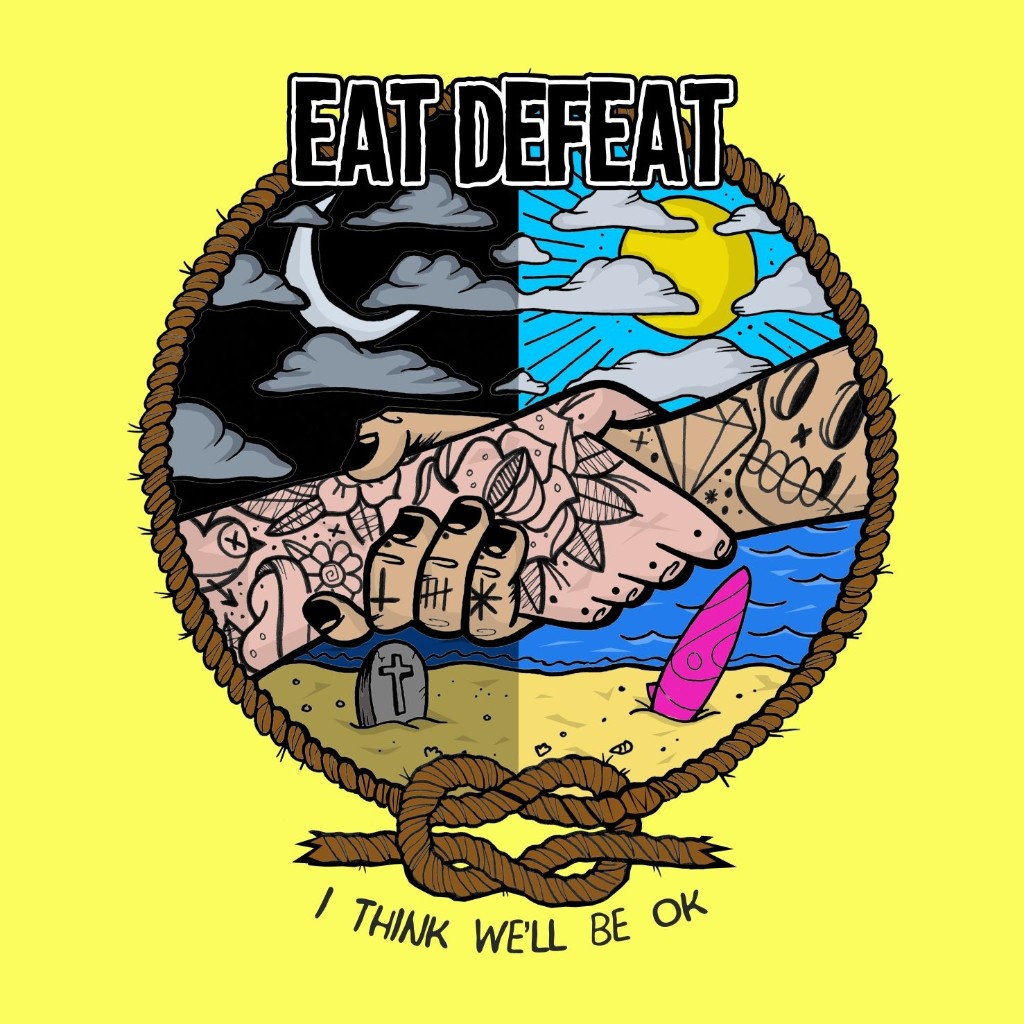
I Think We'll Be OK - Beareded Punk Records
Yorkshire’s Eat Defeat is a tight example of present day pop-punk, serving as a time-tested addition to a relatively stable sonic tradition. Existing somewhere between the bookmarks of Bowling for Soup and New Found Glory, the band’s quick pitter patter of bursting melodic energy feels relevant and infectious all at once. Their latest full length, I Think We’ll Be OK, is a natural contribution to the age-old genre, while bringing its own personality to bare.
Eat Defeat has always boasted a sunny vibe compared with some of its peers. They’re definitely not the type of band you could mistake for a pessimist, and after a few close listens to I Think We’ll Be OK, could easily be proclaimed borderline optimists much in the same vein as The Wonder Years. The band certainly acknowledges the many faces of life’s hardships, but always seeks the the silver lining lying beneath. Opener “A Little Less Than OK” acknowledges that a little insecurity is never a bad thing in grounding one’s reality, stating “I always try to stay a little less than OK, cause it’s the only way I’ll stay sane.” Tales of summer love unravel as “Smile” speaks of accepting one another’s imperfections and personality blemishes, bounding blissfully along under a foundation of thumping bass and steady pop-punk chord progressions that would justify Blink-182 comparisons. When it comes to breakup songs, the band frames them as natural extensions of growing apart, stating “to be honest I’m breathing a sigh of relief,” and that if relationships have an expiry date, they shouldn’t be made to last beyond them.
Eat Defeat is all about personal growth, and songs like “Scorched Earth” and “Self Help (For The Helplessly Selfless)” challenge listeners to seek challenge and learn from experience. The former boasts the powerful line, “let’s make bad decisions, embrace collision, and see where it gets us,” followed later by the reflective sentiment, “we are where we are, and we’ve still got so far [to go].” Meanwhile, the latter explores the notion that the obstacles we encounter serve to make us stronger. The message easily aligns with popular self-help movements like that of Dr. Carol Dweck’s growth mindset, and other self improvement literature.
It’s nice to know that someone out there listening to Eat Defeat might just stand to view a hardship from a different perspective, rather than retreating to depressive states doom and gloom. I Think We’ll Be OK isn’t without its flaws, namely the tendency for the lyrics of this type of pop-punk to blend in with the background, but a studious listen certainly stands to raises spirits. Eat Defeat may not be setting today’s trends, but they’re certainly providing quality tunes for pop-punk enthusiastic.

The Arrow Room, Rancho Cucamonga, CA - 29th March 2026


