Manchester Punk Festival Issues 42nd Name Your Price Compilation
Manchester Punk Festival have released the 42nd volume of their name your price compilation series via Bandcamp ahead of next year’s festival. Manchester Punk…


Tin Knocker - DiWulf Publishing
The second engaging book from Channel Three’s singer & guitarist Mike Magrann answers the burning question: “What the fuck were you guys thinking?” when the band released the (mostly) great, but visually cringeworthy “Last Time I Drank” album in 1985 (that repelled fans), while also vividly describing the reluctant but ultimately satisfying acquiescence to inescapable responsibility and the downsizing of lofty goals. It is a multi-layered memoir with much subtle depth that it is enjoyable, humorous, and surreptitiously instructional. You may learn something about yourself if you perceive deeply enough. Perhaps you are more successful than you thought you were. “Tin Knocker” is more than Mike explaining CH3’s temporary loss of direction. It is a relatable account of coming to terms with big plans and unforgiving reality. Most of us have had huge dreams and were forced by the vicissitudes of life to either change course of pare down our goals into something more realistic and manageable. Who among us has not fantasized about being a professional athlete, a Hollywood celebrity, or a rock star? For the members of the punk rock band CH3, that dream of becoming rock stars seemed to be in genuine reach. They had quickly ascended to success in the Southern California punk rock scene and had developed the talent and drive to reach for the big time. Life and its unknown complications brought that giant hope back to Earth where the band and its members eventually realized their true place in the world.
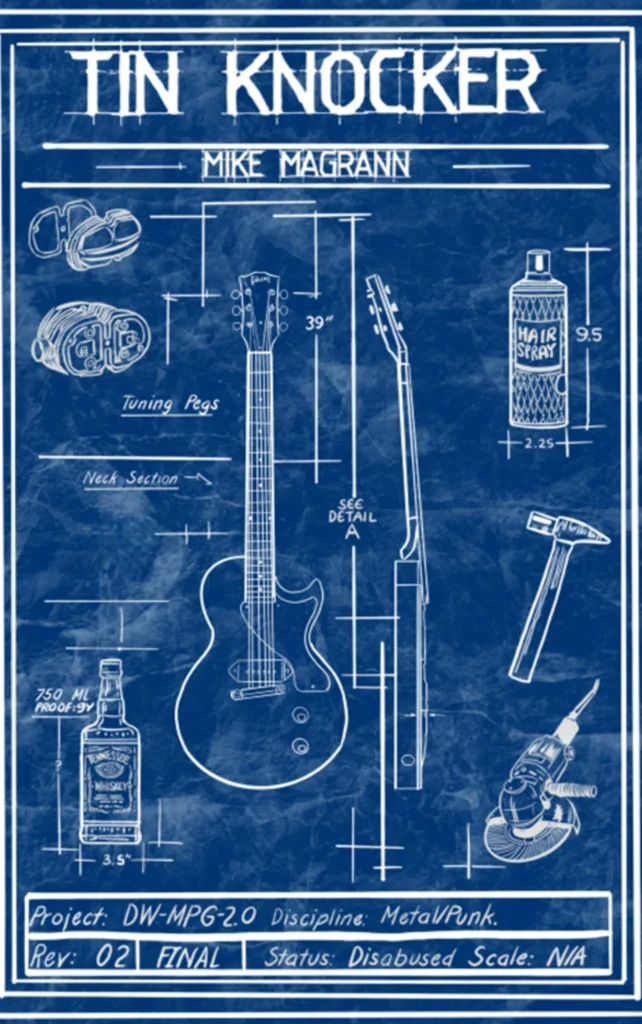
It is only natural for musicians to grow, develop and to be influenced by a wider range of fellow musicians and genres. This is why CH3’s music evolved. It is also perfectly understandable that it is difficult to let go of the freedoms of adolescence and to recoil from the impending responsibilities of life. This is the crossroads where Mike found himself as the insular Hollywood punk rock scene gave way to the spandex-hair metal bands that took over the Sunset Strip. Musicians with inferior talent and even less depth were getting signed to major labels and becoming genuine rock stars. Both Mike and Kimm (CH3’s rhythm guitarist and Mike’s lifelong friend since 2nd grade), saw this and decided they wanted to be famous too. After all, they had the talent, the depth, and the motivation to make it happen. Well, maybe Mike’s drive was not as focused as Kimm’s, but as a Mutt and Jeff couple in both the physical and work-oriented sense, Mike let Kimm handle the networking and logistical duties of hitting the big time while he participated by trying to play the part of future rock god. The path seemed obvious; follow the plan that was successfully executed by others. Meanwhile, Mike took on a temporary job at a metal fabrication business to bide the time until he became world famous. Over time, he learned the intricacies of metal fabrication and how to use and program the Whitney sheet metal cutting machine. Therein lies the macro-metaphor that runs throughout most of the book. Simply put: Follow the plan and you will achieve the desired result. This was the case in metal fabrication and it also seemed to be the case for becoming a rock star. Do this and you will get that. However, life has many more unexpected variables than basic computer code and the future was foreshadowed when Mike was stymied by the unexpected appearance of the Y factor. The 3rd dimension made a surprise appearance in the 2-dimensional world of computer code of X (left/right) and Y (up/down) that he was used to. What now? He had to understand the new reality and conform to it.
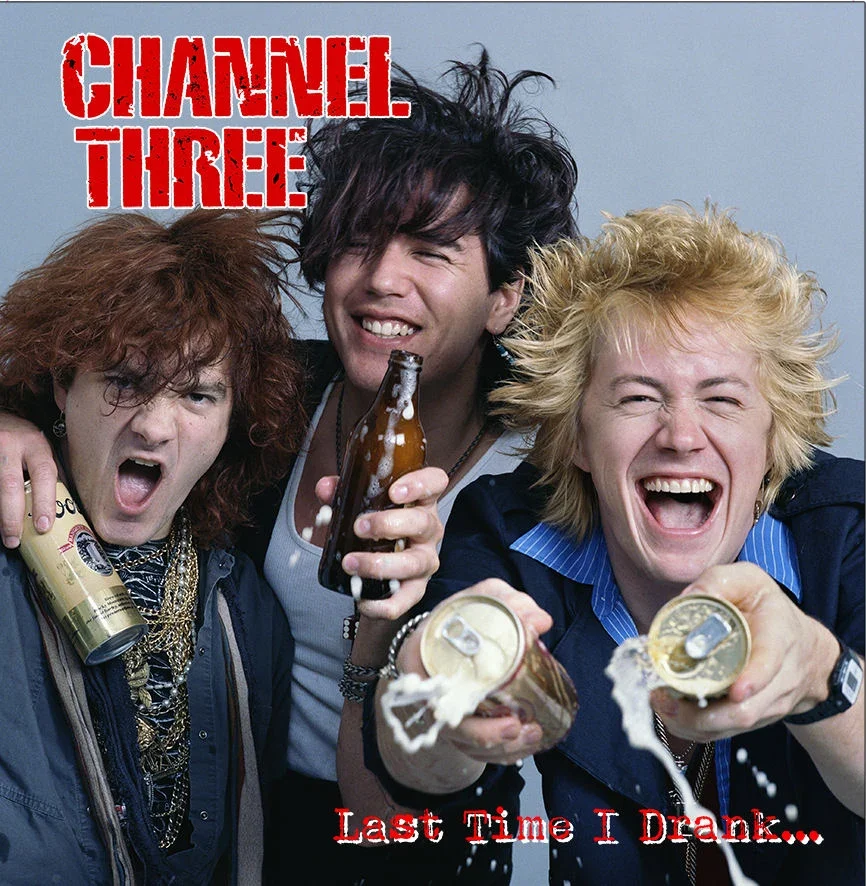
Such was the case with the rock star plan. Like sheet metal that is heated, bent, and cut, Mike and Kimm reinvented CH3 with a new look, a mostly new sound, and a completely different approach to the music industry. By giving them what they wanted, the band would achieve greater fame. However, the band was trying to satisfy the wrong “them.” Instead of pleasing themselves and their fans, they aimed their efforts at satisfying the music industry big shots. We all know how that turned out and in retrospect, we (the CH3 loving public) are glad for it. Even so, Mike’s description of coming to terms with misplaced goals and unrealistic expectations make fascinating reading as the reader gets to experience this point in time through the author’s day-to-day experiences and perceptive insights. It is despite his past reputation as a trouble-making binge drinker, Mike has always been a man of insight and talent. This is the ordinary-man’s tale of self-discovery and most readers will see themselves reflected in Magrann’s experience to some extent. The realization seems to have crystallized when Mike’s father explains that a person’s art rarely becomes their job. “You do your work, and that pays for the fun stuff” he explained to his son. Though somewhat distant, Mike’s father could foresee the future in this instance and was imparting parental words of wisdom. But the process needed to complete itself so the members of CH3 went through the tortured process of creating music under pressure that was almost entirely devoid of personal satisfaction. Despite this anxiety-filled process of creation, the guys were still able to write classics such as “Indian Summer,” “Last Time I Drank,” and “Mary.” The result was the controversial “Last Time I Drank” album that confused the band’s fans and consequently failed to sell well. It seemed that the dream was over and the band was dead.

Mike resigned himself to his work, and during his time there, he began to find the same satisfaction in metal fabrication as he did in making music. To take a blank slate of steel and see the infinite potentials within, and to fashion it into something useful is the work of an artist. More than this, he realized that many of the men he worked with, the ones who took pride in their work, were artists too. Even the foul-mouthed womanizer Xavier, who worked the metal bending press brake was an artist, and an unlikely friend. Slowly, the music industry’s facade melted away like the giant ice sculpture Mike observed at a lavish and Beverly Hills party. “I encountered a huge ice sculpture melting atop a buffet table […] Where did all that money go, I had often wondered. I watched the sculptures drip, their value melting away to nothing.” And so it was with that ill-fated album. The wealthy record executives demanded its tortured creation and pretty much set it aside to rot. All that work for seemingly nothing and it appeared that CH3 was no more. Mike had become an integral part of the metal fabrication shop and the other band members went their separate ways…until Kimm told Mike that the band got an offer. “Which band is that?” Mike asked as he had just seen Kimm’s new band Bulldog. “Us. Channel Three” Kimm replied. It was to open for the Ramones. The two lifelong best friends saw the new road ahead was to return to themselves and to find satisfaction in that. Mike Magrann learned that he needed to get out into world, but CH3 needed to come back home. It is good to see he is finally putting that English Degree to good use too.
Tin Knocker is available through DiWulf Publishing & via CH3‘s online store where you can also purchase The Last Time I Drank on CD and coloured vinyl.


