The Brickabrats Release Debut Single & Video “Fun Night”
Portland, OR's The Brickabrats have released their debut single and video, Fun Night, that was mixed by Mark Kaeder with…


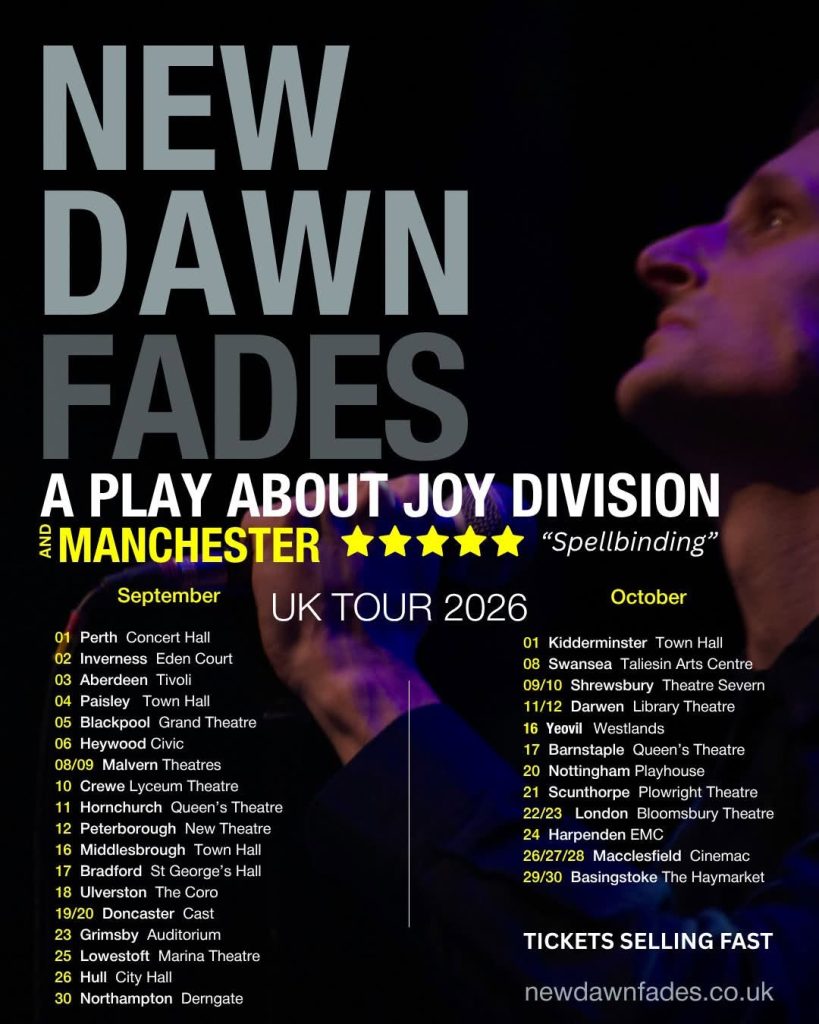
Malvern Theatres - 8th September 2026
There is a particular, rain-slicked geometry to Manchester’s myth-making, a city that has long traded its soot for self-mythology, recycling its industrial past into an eternal, sepia-toned pop-cultural loop. To stage this transition is a perilous enterprise, risking mere heritage-industry pantomime. Yet, in New Dawn Fades, the theatrical machine bypasses facile nostalgia to locate something sharper, bleaker, and altogether more kinetic: the nervous system of an era caught between municipal grime and modernist aspiration. Directed with a scrupulous, almost architectural precision by Lauren, the production functions less as a linear biographical chronology and more as a seance channeled through a Marshall stack. Lauren’s own stagecraft, balancing Machiavellian political undercurrents with a quiet, arresting stillness as Debbie Curtis, anchors an otherwise centrifugal narrative. Opposite her, Josh captures the sepulchral magnetism of Ian Curtis without falling into the trap of cheap impersonation. This is a Curtis who feels less like an icon pinned to a bedroom wall and more like a conduit for the damp, claustrophobic air of late-seventies North-West England, a figure whose epileptic choreography inadvertently rewrote the cultural grammar of a decaying metropolis.
The production wisely understands that Joy Division cannot be divorced from their ecosystem. They were the grim, beautiful byproduct of an agit-pop renaissance that included the abrasive intellectualism of The Fall and the jagged pop architecture of Buzzcocks. Brian Gorman’s Tony Wilson acts as the evening’s ironic, Brechtian demiurge. Breaking the fourth wall with a haunting, surreal whimsy, Gorman frames Wilson not merely as the Factory Records impresario of local lore, but as a self-conscious curator of his own legend, a man narrating his city’s apocalypse with the breathless enthusiasm of a Granada Reports broadcast. Musically and psychologically, the ensemble maps the friction of creation. The tension is amplified by the presence of Rob Gretton, portrayed as an agent of organised chaos and bombastic provocation, and Martin Hannett, whose brilliant, chemically assisted lunacy is rendered with combustible energy. When the ensemble locks into the glacial, mechanised dread of Shadowplay or Transmission, the production transcends theatre; it becomes a visceral reminder of why these three-minute manifestos still haunt the modern consciousness.
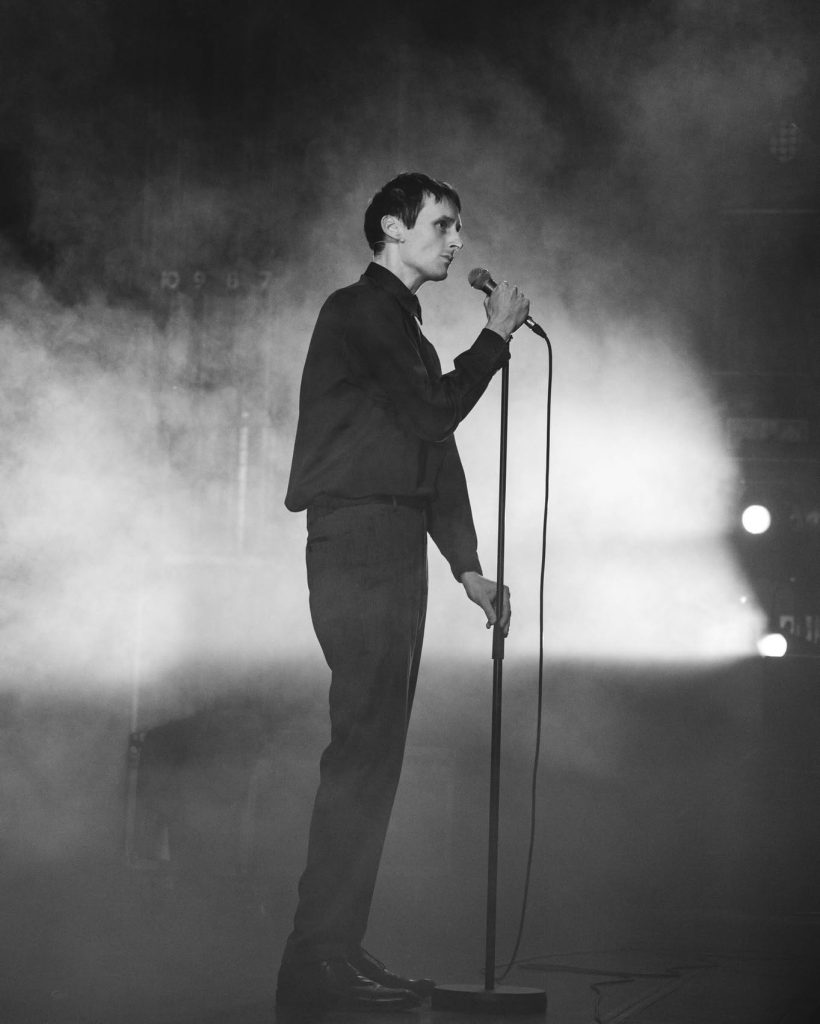
Drafted with a script that owes as much to the kitchen-sink grimness of Keith Waterhouse and Harold Pinter as it does to rock-and-roll hagiography, New Dawn Fades resists comfortable categorisation. It utilises a virtual set of 1979 archival debris and Free Trade Hall ghosts to burrow straight into the regional psyche. By the time the production reaches its inevitable, compounding terminus, handling Curtis’s final, tragic exit with a devastating lightness of touch, the auditorium is left suspended between catharsis and clinical observation. As Love Will Tear Us Apart echoes into the dark, you are reminded that in Manchester, despair and euphoria have always occupied the exact same frequency. There is an enduring, soot-stained mythology to the city of Manchester, a sprawling industrial organism that has spent decades recycling its own melancholy into a blueprint for modern music. To capture this alchemy on stage without sinking into heritage-industry pastiche is a formidable task. Yet New Dawn Fades cuts straight to the raw, pulsating nerve of the late-seventies North-West, anchoring its narrative not merely in a chronology of band milestones, but in the volatile, symbiotic chemistry binding a group of young provincials to their self-appointed visionary, Anthony H. Wilson.

At the heart of the production is the spectral, intellectual figure of Tony Wilson, brought to life with a whimsical, Brechtian surrealism that shatters the fourth wall and drags the audience headfirst into the libretto. Wilson was a man of infinite, breathless contradictions, and his relationship with the boys who would become Joy Division, and later, Phoenix-like, New Order, defined an entire cultural renaissance. For Wilson, the band wasn’t just a signed asset on the burgeoning roster of Factory Records; they were the intellectual vanguard of an agit-pop explosion that included the abrasive genius of The Fall and the jagged architecture of Buzzcocks. Yet, Wilson’s entrepreneurial zeal was matched only by his staggering naivety. Factory Records was merely the first of his legendary, high-wire adventures. Later, of course, came The Haçienda, that postmodern pleasure dome that Wilson haplessly managed in blissful, stubborn conjunction with a syndicate of hardened gangsters, trading high-art aspirations for underground underworld economics in a collision course of pure Manchester absurdity.
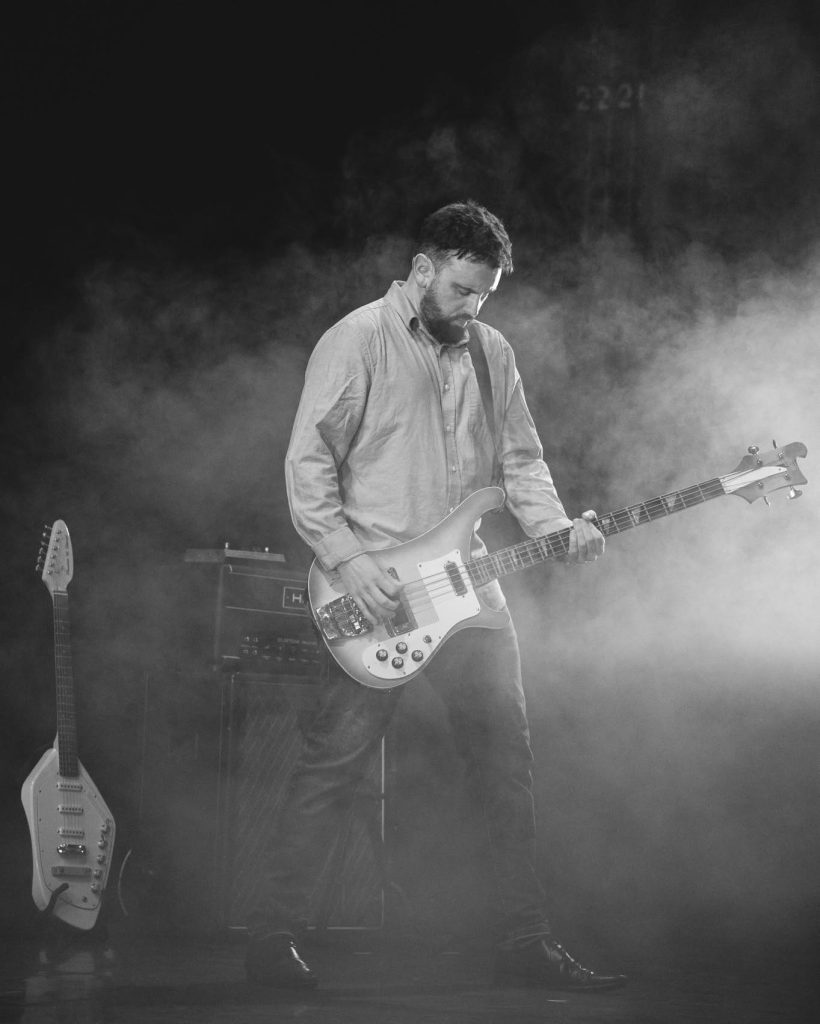
No exploration of Joy Division’s sonic architecture can ignore the madcap genius of producer Martin Hannett. Rendered with combustible, eccentric energy, Hannett is portrayed as a complete and utter lunatic who simply went for it, a studio auteur armed with a sea of trailing wires, an impossibly canny ear, and a total disregard for conventional studio etiquette. Hannett was a brilliant savant who routinely doled out production direction that was totally and utterly unworkable, famously forcing drummers to play on roofs or execute absurd, counter-intuitive commands just to capture an alien atmosphere. Yet this chaotic methodology changed everything. When the ensemble locks into the glacial, mechanical dread of tracks like Shadowplay or Transmission under that kind of pressure, the stage transforms. It ceases to be mere theatre and becomes a visceral recreation of the icy, concrete-clad reality that birthed them.
As the production threads its way toward its inevitable, harrowing terminus, the delicate mastery of the staging becomes startlingly apparent. The play approaches Ian Curtis’s tragic death with a subtle, perishable, and devastating lightness of touch. There is no crude sensationalism here; instead, the production handles the final, compounding moments of Curtis’s life with a profound, artistic grace that leaves the auditorium simultaneously euphoric and sobbing. At the centre of this emotional maelstrom stands Love Will Tear Us Apart, performed not merely as a pop song, but rendered in its true, agonising context: a literal suicide note wrapped in a euphoric refrain that effortlessly transcended genres, class boundaries, andmusical definitions. As those immortal, lacerating lyrics echo through the theatre, the audience experiences two sides of the exact same coin: a heavy, suffocating grief married to an ecstatic celebration of a short life lived at maximum velocity. It is a stark reminder that in the universe of Joy Division and Tony Wilson, light entertainment was never actually light at all.
You can book tickets for New Dawn Fades: A Play About Joy Division & Manchester 2027 shows here.


