Tornado Lobster Killer Reveal New Album “Lobsteria’
Milan's Tornado Lobster Killer have released Lobsteria, a record that transforms uncertainty, frustration, and personal upheaval into something urgent, honest, and cathartic. The…


Cerebral Caustic 30th Anniversary Edition - Cherry Red Records
Thirty years after its release, Cerebral Caustic remains one of the most fascinating and exhilarating entries in The Fall’s vast catalogue. Long regarded as an awkward cousin among the group’s classic albums, time has been kind to this record. What once seemed rough and wilfully difficult now sounds remarkably alive. This five-disc anniversary edition from Cherry Red Records offers a chance to revisit both the album and the extraordinary circumstances behind it. Listening today, it feels radically different from much of the mid-1990s alternative rock landscape. While many artists embraced digital recording and polished production, Mark E. Smith appeared determined to head in the opposite direction. Rumour has it that Smith chose Pavilion Studios in Ladbroke Grove for its analogue recording equipment. Whether true or simply another piece of The Fall‘s folklore, the story feels plausible. The album has a warmth, grit and unpredictability that could only come from musicians playing together and reacting in real time. The sessions themselves have become legendary. Recorded in little more than twelve days, the band worked without a click track. Smith reportedly believed first takes were usually best, arguing that repetition drained spontaneity. Rather than chasing perfection, he pursued energy and momentum. Mistakes were tolerated, accidents embraced and imperfections turned into strengths.
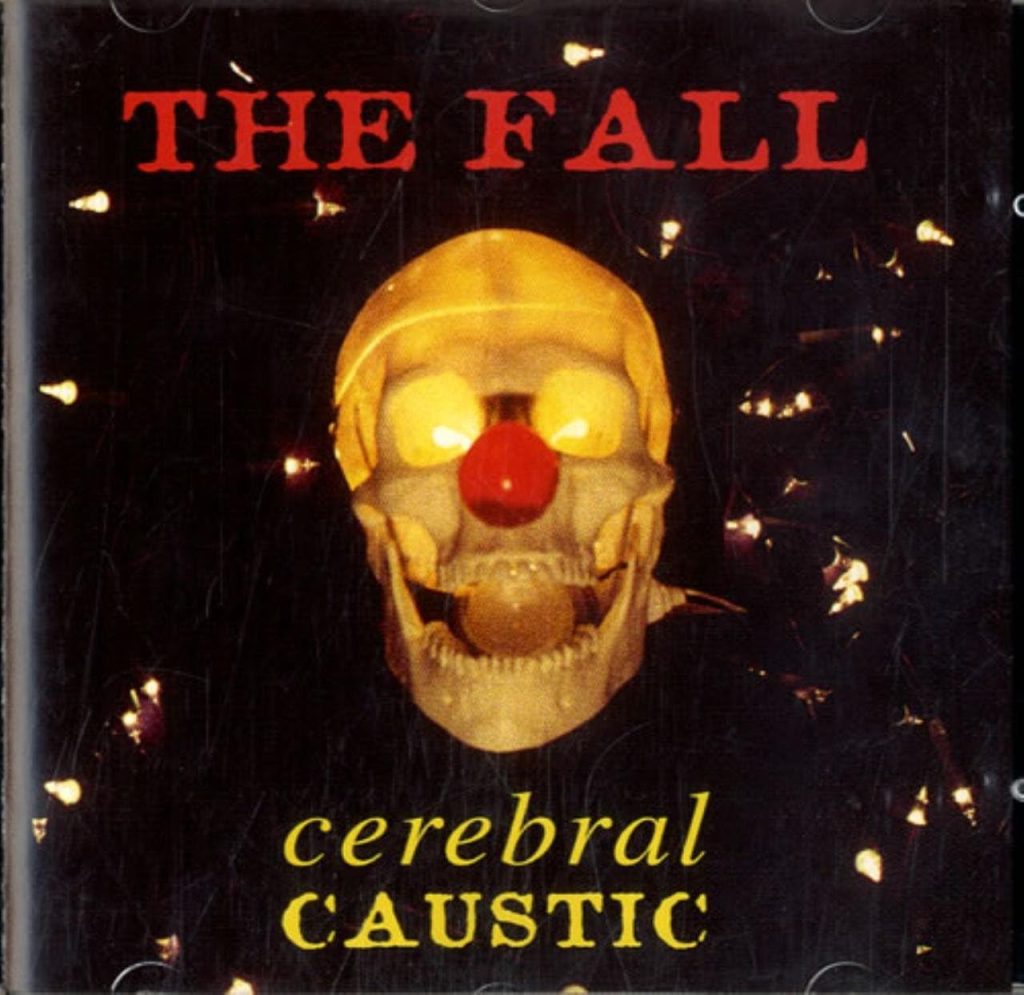
The result is an album that feels startlingly alive. From the opening moments of “The Joke”, the listener is thrown into organised chaos. Simon Wolstencroft attacks the drums with remarkable speed, yet beneath the frenzy lies discipline. Under Smith’s instruction, he largely avoids conventional drum rolls, creating a direct, relentless rhythmic assault. The effect is striking. Without fills to signal transitions, the drums become a locomotive force driving the music forward. Everything feels urgent, as though the band is constantly hurtling towards the next collision. Meanwhile, Smith delivers his vocals while introducing another layer of chaos through his handheld cassette recorder. Snippets of speech, distorted voices and mysterious sonic fragments drift in and out of the mix like ghosts. What could have become a mess instead becomes one of the album’s defining strengths.The contrast between Smith’s main vocal and the degraded cassette recordings creates a strong sense of depth. Some phrases feel immediate and confrontational, while others seem to arrive from another room or another era. Rather than gimmicks, these tape interventions become part of the album’s sonic architecture, giving the recordings an unsettling, hallucinatory quality.
Used throughout the record, the technique becomes one of its most innovative features. The listener is never entirely sure where the “real” performance ends and the manipulated one begins. That atmosphere continues on “Don’t Call Me Darling”, one of the album’s most aggressive moments. Craig Scanlon’s angular guitar collides with a wall of distortion that seems perpetually close to collapse. Smith’s vocal arrives drenched in fuzz, sounding less like a singer than an irate short-wave radio transmission fighting through a storm. The distortion transforms the performance into something both comic and threatening. Every repetition of the title feels confrontational. It is ugly, abrasive and magnificent. Elsewhere, “Pearl City” drags listeners into Manchester’s underworld with characteristic The Fall perversity. Steve Hanley’s bass is the album’s secret weapon, providing an immovable anchor beneath the surrounding madness. Around him the band can veer wildly, yet his playing keeps everything coherent.“Rainmaster” may be the album’s hidden masterpiece. Beneath its dreamlike atmosphere lies some of the record’s most evocative guitar work, with spacious lines recalling late-1960s California psychedelia. The tones feel distant and warm, lending the track a strange beauty amid the disorder. It captures The Fall’s gift for taking familiar influences and twisting them into something uniquely their own. Then comes “Life Just Bounces”, one of the album’s finest achievements. Beneath its infectious momentum lies a perfect example of Smith’s instinct for creative sabotage.
Just as the song threatens to become accessible, an awkward piano figure appears, introducing the friction that made The Fall unique. The humour running through Cerebral Caustic is often overlooked. “Feeling Numb” turns the growing prescription drug culture of the mid-1990s into bleak comedy. Brix Smith’s detached refrain provides a perfect counterpoint to Smith’s agitation. The contrast creates both tension and wit. “The Aphid” demonstrates Smith’s gift for transforming mundane subject matter into something bizarre. What begins as an eccentric observation soon mutates into a surreal fever dream. “Pine Leaves” stands as one of the album’s most enigmatic pieces. It may contain one of the most avant-garde lyrics Mark E. Smith ever recorded, but its power comes equally from the psychedelic treatments surrounding it. Spectral effects, disorientating textures and shimmering embellishments create an atmosphere of depth and otherworldliness. The track drifts between dream and reality, with Smith’s voice appearing and disappearing through a haze of illusion. Its strange beauty reveals itself more fully with each listen. It is one of the album’s most experimental moments and among its most rewarding, showing the group’s willingness to pursue abstraction without losing emotional impact.
The record continues with Frank Zappa’s “I’m Not Satisfied”, reworked in typical Fall fashion. Rather than treating the original reverently, the band folds it into the album’s peculiar world before arriving at the notorious “Bonkers in Phoenix”. Curiously, it has often been suggested that the title was actually a misprint and should have been “Bonkers at Phoenix”. According to long-circulating Fall lore, the song began as a shimmering shoegaze ballad written by Brix Smith. Mark E. Smith, however, had other ideas. After a notorious fists-on-keyboards session, he effectively sabotaged the composition and reimagined it as a song about a bad acid trip at the Phoenix Festival. What began as something dreamy emerged as a disorientating track full of crude keyboard attacks and unease. The story does not end there. Following the keyboard assault, Smith reportedly added coughs and bursts of laughter recorded through a vintage microphone, further undermining any move toward shoegaze. If the band had ever been in danger of embracing the genre, “Bonkers in Phoenix” put an end to it. There are conflicting stories about Brix Smith’s reaction, and the truth remains difficult to pin down. What is certain is that the track caused controversy. One enduring rumour claims that as many as one hundred fans returned the record, insisting it had damaged their speakers. Whether this was genuine outrage, misunderstanding or another exaggerated tale from the world of The Fall is impossible to know. Whatever the truth, the clash between Brix Smith’s melodic instincts and Mark E. Smith’s determination to disrupt expectations produced one of the album’s most memorable moments.
What emerges from Cerebral Caustic is not merely an album but a document of a philosophy. This was a band operating without safety nets, trusting instinct over precision and embracing uncertainty rather than eliminating it. The expanded Cherry Red Records package reinforces that conclusion. The Peel Sessions, live material, rough mixes and associated recordings reveal a group constantly evolving, experimenting and refusing to become predictable.Three decades later, Cerebral Caustic sounds less like a relic than a challenge to contemporary recording practices. Its imperfections have become strengths. Its chaos has become character. Produced by Mark E. Smith and Mike Bennett for Permanent Records, it remains a testament to what can happen when musicians follow instinct wherever it leads. Chaotic. Inspired. Unique. And very much in keeping with the Mark E Smith manifesto.
Cerebral Caustic‘s 30th anniversary edition will be released on the 28th August and is available for pre-order on two vinyl variants and the five CD box set via Cherry Red Records.


